Commercial Carpet Contractors | What Should Business Owners Expect?

Admin • August 13, 2026

Share this article

TL;DR

  • Commercial carpet contractors should do more than install carpet. You should expect product guidance, accurate measuring, floor prep review, removal planning, scheduling, installation, cleanup, and a final walkthrough.
  • Commercial carpet is different from residential carpet. Business spaces usually need flooring that handles heavier foot traffic, rolling chairs, customers, employees, cleaning routines, and less downtime.
  • Carpet tile is often the most practical commercial carpet option. It works well for offices, property management spaces, corridors, and commercial areas because damaged tiles can often be replaced individually.
  • Broadloom carpet can still work in commercial spaces. It is useful where a softer wall-to-wall look matters, but repairs and replacement can be more disruptive than carpet tile.
  • Subfloor prep matters. Commercial carpet, LVP, laminate flooring, sheet vinyl, and waterproof flooring all need a clean, dry, flat, stable base.
  • Commercial flooring estimates should be detailed. A real estimate should explain material, labor, removal, disposal, prep, adhesive, transitions, base, furniture moving, phasing, after-hours work, and exclusions.
  • LVP or sheet vinyl may be better than carpet in some areas. Entryways, break rooms, bathrooms, basements, utility rooms, wet areas, and high-cleaning spaces may need LVP installation, sheet vinyl, or waterproof flooring.
  • Business downtime should be planned before work begins. The right contractor should discuss access, business hours, customer flow, employee areas, furniture, and whether the job should be phased.
  • The cheapest bid is not always the best value. A low price that skips prep, removal, moisture review, or transitions can cost more later.


If you are comparing commercial carpet contractors in West Jordan, South Jordan, or greater Salt Lake County, you should expect more than someone who shows up with carpet and adhesive. A commercial flooring project involves product selection, accurate measuring, floor prep, removal, disposal, moisture concerns, business scheduling, transitions, baseboards, furniture, cleanup, and a final walkthrough.


Residential Flooring Solutions helps business owners, property managers, and commercial property owners compare carpet installation, LVP and laminate flooring, and subfloor repair before the work begins. That matters because the right commercial floor is not just about appearance. It has to perform under real use.


Commercial Flooring Is Different From Residential Flooring


Commercial flooring gets different wear than a typical home. Employees walk the same paths every day. Customers track in dirt, snow, and grit. Office chairs roll over the surface. Furniture may be moved around. Cleaning schedules may be more frequent. Business hours can limit when installation work can happen.


A carpet that works well in a bedroom may not belong in an office corridor, lobby, clinic, retail space, or apartment common area. Commercial spaces usually need lower pile, denser construction, stronger backing, practical color, and installation that fits the way the business operates.


That is why commercial carpet contractors should start with how the space is used. A good contractor should ask about traffic, work hours, customers, employees, rolling chairs, cleaning expectations, moisture risk, and downtime before recommending a product.


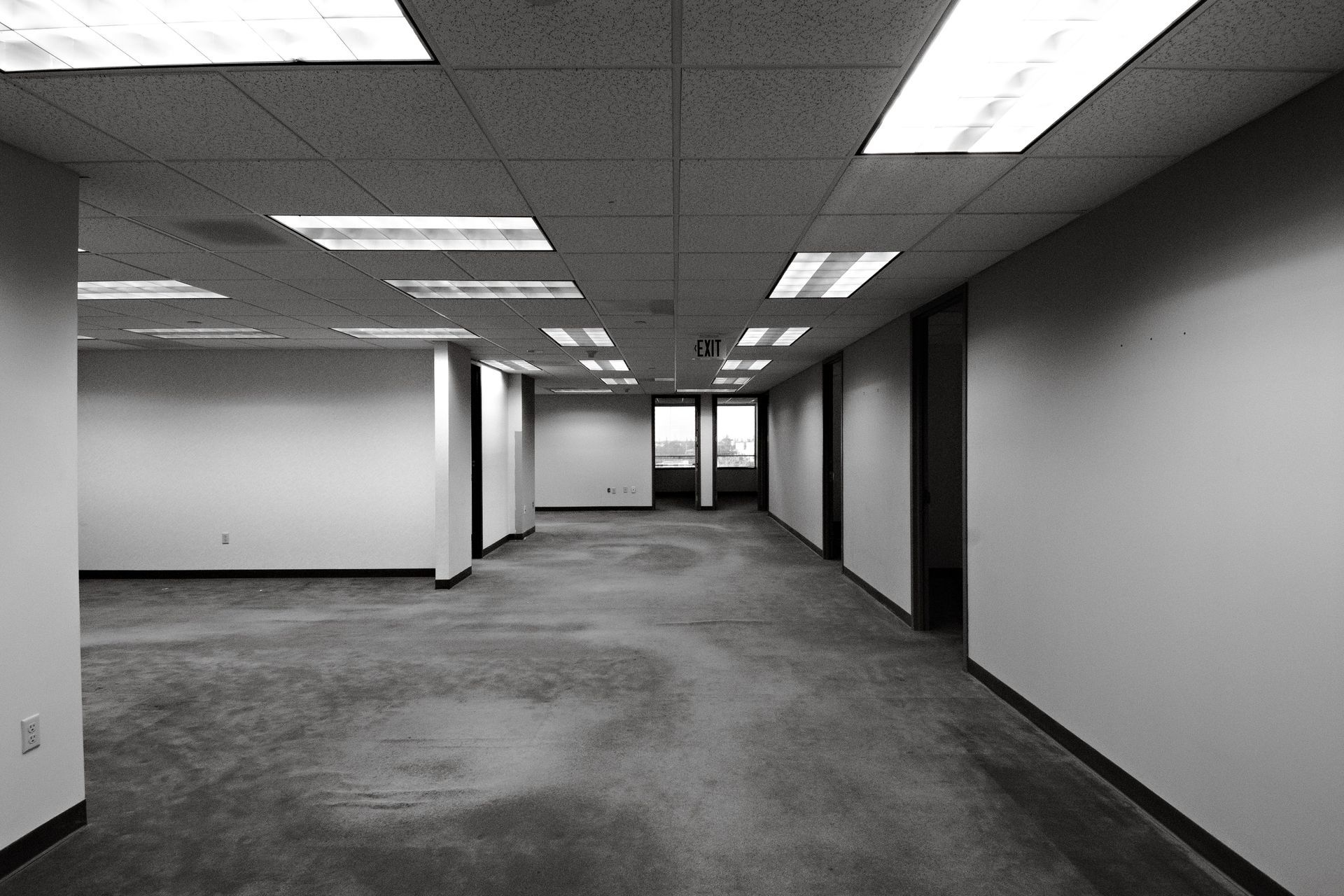
Empty office hallway with gray carpet, white walls, and fluorescent ceiling lights

What Should Business Owners Expect First?


The first step should be a walkthrough. A flooring contractor should review the existing floor, measure the space, look at transitions, identify furniture or fixtures that may affect installation, and ask how the business needs to operate during the project.


You should expect questions like:


What areas get the most traffic?


Will customers need access during installation?


Can work happen after hours?


Is furniture moving needed?


Is the space vacant or occupied?


Are there moisture concerns?


Is old adhesive present?


Should the floor be carpet, carpet tile, LVP, sheet vinyl, or waterproof flooring?


Those questions matter because commercial flooring is as much about planning as installation.


A Professional Standard Matters


The Carpet and Rug Institute identifies CRI 104 as the commercial carpet installation standard and says the commercial and residential standards address installation principles, planning, and subfloor preparation. CRI 104 also states that “professionally trained and qualified floor covering installers” should be used for commercial carpet installations.


That quote matters because commercial carpet installation is not just rolling out material. Proper installation depends on planning, substrate conditions, adhesive, layout, product requirements, and installer skill.


Carpet Tile vs Broadloom Carpet


Commercial Carpet Tile


Carpet tile is one of the most common commercial flooring choices because it is modular. Instead of one large roll, carpet tile comes in squares or planks. If one tile becomes stained or damaged, it may be possible to replace that section instead of replacing the entire floor.


Carpet tile works well in offices, property management spaces, apartment common areas, corridors, commercial suites, and areas where maintenance flexibility matters. It can also be easier to phase during installation, which helps reduce downtime.


Commercial carpet tile can also support different design layouts. You can create a clean, professional look without making the space feel too formal or too residential.


Broadloom Commercial Carpet


Broadloom carpet comes in large rolls. It can create a softer, more continuous wall-to-wall look. It may work well in conference rooms, worship spaces, hospitality areas, offices, or commercial rooms where comfort and appearance matter.


The tradeoff is maintenance. If a section is damaged, broadloom can be harder to repair than carpet tile. Seams, furniture, access, and replacement can also make the project more disruptive.


A good contractor should not push one option everywhere. Carpet tile may be best in office corridors. Broadloom may be best in a quiet meeting room. LVP may be better in a break room. Sheet vinyl may be better in a utility space.


When LVP, Sheet Vinyl, or Waterproof Flooring Is Better


Commercial carpet is not the best answer for every business area.


LVP installation is often better for entryways, hallways, retail spaces, break rooms, rental offices, property management spaces, and areas with rolling traffic or frequent cleaning. LVP is easier to clean than carpet and usually handles spills better.


Sheet vinyl can be a smart choice for bathrooms, laundry rooms, utility spaces, storage rooms, and budget-focused commercial areas. It needs a smooth base because imperfections can show through.


Waterproof flooring may be better for basements, wet areas, pet-related businesses, medical-adjacent rooms, laundry areas, and spaces where moisture is common.


Laminate flooring can look good in dry office spaces, but it needs caution in commercial settings. Moisture, rolling chairs, heavy use, and floor flatness can all affect performance.


Floor Prep Is Where Many Projects Succeed or Fail


Commercial flooring depends on the base below it. Carpet tile, broadloom carpet, LVP, laminate, sheet vinyl, and waterproof flooring all need proper prep.


After old flooring is removed, the contractor should check for cracks, high spots, low spots, old adhesive, dust, moisture, uneven concrete, loose panels, damaged subfloor, or contamination. If these issues are ignored, the finished floor may fail early.


Residential Flooring Solutions often sees that the visible flooring is not the only issue. Once old carpet or vinyl comes up, the real problem may be old glue, uneven concrete, pet odor, moisture staining, or soft spots. Fixing those issues first protects the new floor.


Subfloor repair and prep should be part of the estimate conversation, not a surprise after the job starts.


What Should a Commercial Flooring Estimate Include?


A commercial flooring estimate should be clear and complete. It should identify the flooring material, square footage, product style, backing, color, adhesive system, transitions, base, labor, demo, disposal, prep, and project timeline.


It should also explain exclusions. Hidden damage, moisture mitigation, major leveling, asbestos-related work, electrical or data line relocation, furniture disassembly, and extra mobilizations may not be included unless specifically stated.


This is where honest pricing matters. Two bids can look very different if one includes prep and the other does not. The lower bid may not be lower once missing items are added.


Commercial carpet cost varies by product, installation method, condition of the existing floor, and project scope. HomeGuide lists commercial wall-to-wall carpet at about $5 to $12 per square foot installed and commercial carpet tile at about $2 to $11 per square foot installed. Use those as planning ranges only because prep, removal, furniture, phasing, and local conditions can change the final price.


Modern glass skyscrapers against a clear blue sky

How Business Downtime Should Be Planned


Business interruption is one of the biggest commercial flooring concerns. A home flooring delay is frustrating. A business flooring delay can affect employees, customers, tenants, revenue, or building access.


A strong contractor should talk about scheduling before installation begins. Some projects can happen during business hours. Others need evening, weekend, or phased installation.


Phasing may allow one section of the office to stay open while another section is being installed. Furniture may need to be moved in stages.


Customer pathways may need to stay clear. Finished areas may need protection while the next area is being installed.


You should also ask when the floor can be walked on, when furniture can be moved back, and whether adhesive cure time affects reopening.


Common Red Flags When Hiring Commercial Carpet Contractors


A vague estimate is a red flag. If the bid only says “commercial carpet installed” without explaining material, prep, removal, adhesive, transitions, base, and exclusions, you do not have enough information.


No subfloor discussion is another red flag. Commercial floors often have old adhesive, uneven concrete, cracks, moisture concerns, or previous flooring damage. If the contractor does not mention prep, the project may run into problems later.


No downtime plan is also a concern. A business needs to know when work happens, what areas are blocked off, how furniture is handled, and when the space can reopen.


Finally, be cautious if a contractor recommends carpet everywhere without discussing LVP, sheet vinyl, waterproof flooring, or other commercial flooring options. The best product depends on the room.


What Property Managers Should Expect


Property managers need fast scheduling, durable products, clear pricing, and flooring choices that support tenant turnover. Carpet may work well in offices, bedrooms, or quiet commercial rooms. Carpet tile can be useful in common areas because individual tiles may be replaced. LVP can be better for hallways, entry areas, and rental spaces that need easier cleaning.


A property manager should also ask about product standardization. Using consistent colors and products across units can make future repairs easier. It can also reduce decision time during turnover.


Residential Flooring Solutions can help property managers choose practical products for each area instead of relying on one material for every room.


Questions to Ask Before Hiring a Commercial Flooring Contractor


Ask whether carpet tile or broadloom is better for your space. Ask what product is rated for the traffic level. Ask whether individual carpet tiles can be replaced later. Ask whether LVP, sheet vinyl, or waterproof flooring would be better in any rooms.


Ask what prep is included. Does the estimate include removal, disposal, adhesive removal, patching, leveling, moisture review, transitions, base, furniture moving, and cleanup?


Ask how the schedule will work. Can installation happen after hours? Can it be phased? What areas will be unusable? When can customers or employees walk on the floor? Who is the point of contact during the project?


Clear answers before installation prevent frustration after installation.


How Residential Flooring Solutions Helps Commercial Clients


Residential Flooring Solutions starts with the way the space is actually used. The team looks at traffic, business hours, customer access, employee areas, cleaning needs, moisture, sound control, budget, durability, and project timing.


From there, you can compare commercial carpet, carpet tile, broadloom carpet, LVP installation, laminate flooring, sheet vinyl, waterproof flooring, and subfloor repair. The goal is to choose flooring that fits the room, not just the cheapest product or the first sample that looks good.


You also get practical guidance on prep. If the subfloor needs repair, if old adhesive needs attention, or if another material would perform better, those details should be addressed before installation.


Commercial Carpet Contractors Should Make the Project Easier


Commercial carpet installation is more than putting carpet on the floor. Business owners should expect product guidance, accurate measuring, floor prep review, clear pricing, downtime planning, professional installation, cleanup, and a final walkthrough.


Carpet tile is often practical for offices and commercial spaces. Broadloom can work when wall-to-wall comfort matters. LVP, sheet vinyl, and waterproof flooring may be better in wet, high-traffic, or maintenance-heavy areas. Subfloor repair and moisture-aware prep protect the finished flooring investment.


For commercial carpet installation, carpet tile, broadloom carpet, carpet replacement, LVP installation, laminate flooring, sheet vinyl, waterproof flooring, commercial flooring, or subfloor repair in West Jordan, South Jordan, and greater Salt Lake County, request a free estimate from Residential Flooring Solutions. Get honest pricing, proper prep, quality materials, and timely installation from a local flooring contractor that understands what business owners should expect from commercial carpet contractors.

Recent Posts

Modern open-plan living room and kitchen with black marble island, shelving, and warm wood accents.
By Admin August 11, 2026
Choose the best flooring for your home aesthetic. Compare carpet, LVP, laminate, sheet vinyl, waterproof flooring, and prep for Utah homes.
Wooden letter tiles spelling “SUMMER SALE” on a tan lattice background
By Admin August 5, 2026
Learn why carpet stores put carpet on sale, what costs to watch for, and how to compare carpet, LVP, padding, and installation value.
Low-angle view of a hotel room with a bed, chair, and sunlit window over a patterned carpet.
By Admin August 4, 2026
Learn carpet basics, how different carpet types are made, and how fiber, pile, padding, subfloor prep, and installation affect durability.
Carpeted living room with staircase, gray sofa, TV, and wood-trimmed windows and door.
By Admin July 29, 2026
Learn what a good carpet density is, why it matters, and how carpet, padding, LVP, and subfloor prep affect flooring performance.
Two people cut a woven rug from the floor with blue-handled scissors, showing damaged flooring underneath
By Admin July 29, 2026
Learn what goes under carpet, why padding and underlayment matter, how subfloor prep affects carpet life, and when LVP or waterproof flooring may be better.
Modern office lounge with orange ottomans, patterned carpet, and glass walls
By Admin July 23, 2026
Learn whether DIY carpet installation is worth it, what tools you need, what can go wrong, and when to hire a professional flooring contractor.
Person installing hardwood floor with a measuring tape in a room
By Admin July 23, 2026
Compare Utah carpet stores and installers using Reddit and review insights. Learn what to avoid and why Residential Flooring Solutions stands out.
Small white and brown dog seen from behind on a gray paved path
By Admin July 17, 2026
Learn how long carpet should last, when to replace it, and when LVP, laminate, sheet vinyl, or subfloor repair may be the better choice.
Empty modern room with light laminat wood floors, white walls, and a small table by a bright window.
By Admin July 14, 2026
Learn what laminate wood flooring is, where it works best, how it compares to LVP and carpet, and what Utah homeowners should know before installation.
Modern covered patio with wood floor, black beams, sofa, coffee table, rug, and dining area leading to a garden.
By Admin July 9, 2026
Learn everything about luxury vinyl plank flooring, including LVP cost, installation, waterproof options, subfloor prep, and best rooms for Utah homes.
Show More