
Builder-Grade Carpet: When an Upgrade Is Worth It in Utah Homes
You probably did not think much about the carpet on closing day. It was new, it was clean, and it matched the model home you toured. Then a few months went by in a new Wasatch Front build, and you started noticing things. The path from the garage entry to the kitchen has gone slightly dark and flat. The stairs show shading where every foot lands the same way. Winter arrived, and the grit from boots worked itself into the fibers in a way the vacuum does not fully pull back out.
That carpet is almost certainly builder grade carpet, and the question in front of you is not whether it is good or bad. It is whether the rooms that matter most in your house deserve something better, and whether now is the right time to act. Builder-grade carpet is the thin, basic carpet developers install at scale across many homes, and it genuinely works fine in some rooms while struggling in others. Replacing carpet in a furnished, lived-in home later costs more disruption than doing selected rooms early, so choosing where to spend is the real decision. This article walks through how to recognize basic carpet by touch and sight, which rooms to keep versus upgrade, what an upgrade actually changes, when a different product fits better, and what to expect from a carpet installation estimate.
What Builder Grade Actually Means on a New-Build Floor
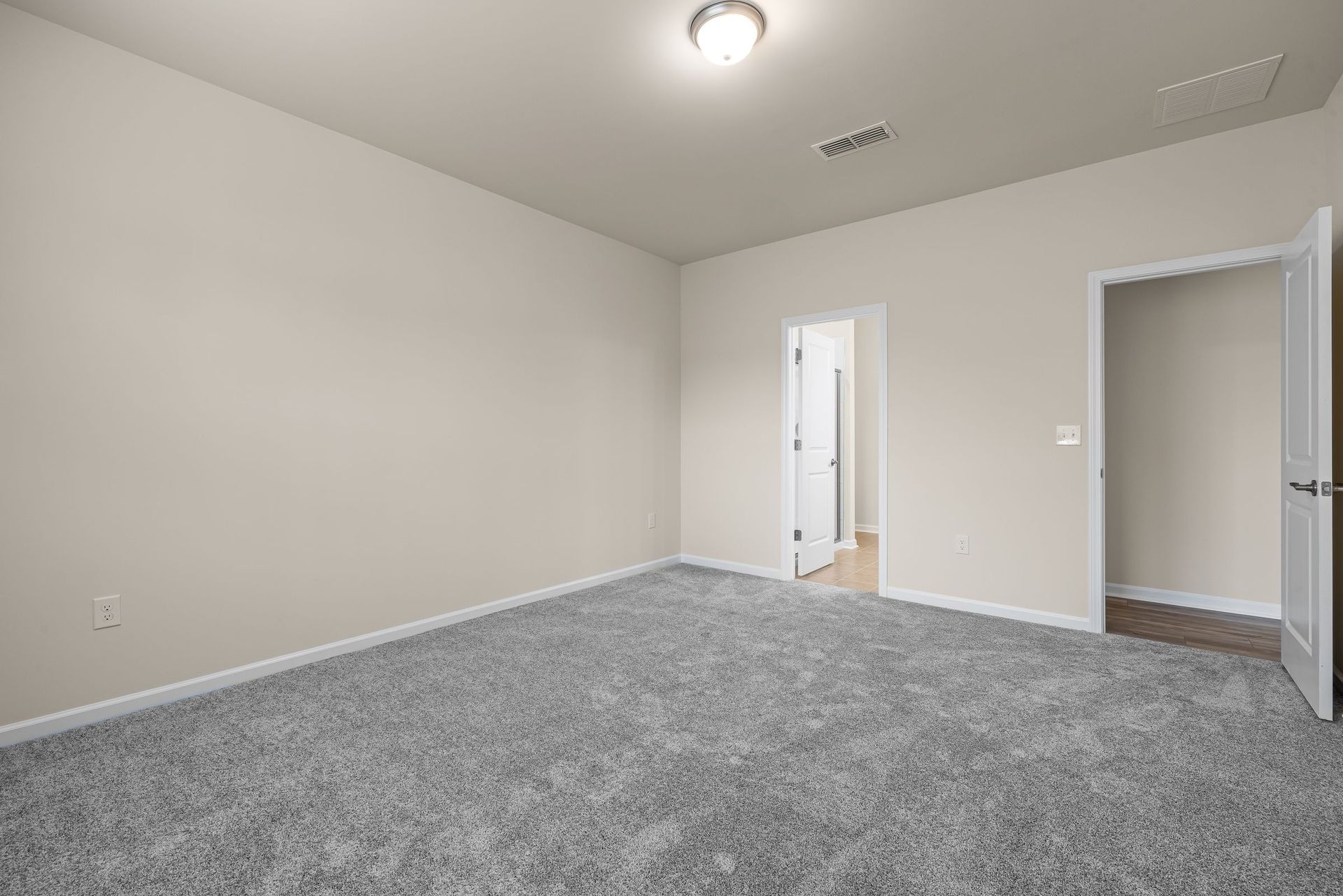
Builder grade is a descriptive industry term, not a regulated specification. There is no certification, no standard definition, and no enforcement of what the phrase means. In practice, it describes carpet that a builder or developer selected for cost efficiency across an entire subdivision or portfolio of homes, rather than for one household's specific traffic, pets, kids, or comfort preferences. It is a business reality of volume construction, not a defect. Builders have to deliver a finished home at a workable price point, and flooring is one of the places where a lower product tier still photographs well in a model home under showroom lighting.
Because the term is unregulated, two homes in the same subdivision can carry noticeably different carpet. The lot that closed early in the phase may have a different roll, style, or pad than the one that closed at the end. That is why the useful move is to evaluate the floors in your own house rather than assume you know what you have based on what a neighbor described.
The characteristics you commonly see in this tier are a thinner face, a looser construction, and minimal or basic pad underneath. Two plain-English terms help here. Carpet face weight is how much fiber is in the pile; more fiber generally means more material available to wear before the carpet looks tired. Carpet density refers to how tightly packed those fibers are against one another. Both matter, and neither tells the whole story on its own, because fiber type and yarn twist influence performance just as much. Numeric thresholds do not belong here, and you should be skeptical of anyone who offers them without seeing your rooms, because what counts as adequate depends entirely on the fiber, the household, and where the carpet sits in the home.
Two questions homeowners ask constantly deserve direct answers. First: is builder grade flooring bad? No. It is basic, and it is best matched to light-use rooms. A guest bedroom with three nights of use per month is a perfectly reasonable place for it. Second: did you get a bad install or just basic carpet? If the carpet looks even, the seams are tight, and there are no wrinkles, then what you are noticing is almost certainly the product tier rather than workmanship. Basic carpet showing traffic lanes in month eight is the carpet doing exactly what a thin, loosely constructed carpet does in an abrasion zone.
How to Recognize Thin, Basic Carpet in Your Own Home
You do not need lab equipment for this. A few checks an installer would do in your hallway take about five minutes with your hands and eyes.
Press your hand flat into the pile and lift it. Carpet with substance pushes back and recovers its height quickly. Thin pile goes down easily and comes back slowly, or not all the way. Next, find an edge where you can see a cross-section: the transition strip at a doorway, or the gap at a floor heat register. You can often read the pile height and get a sense of the pad thickness right there. Finally, compare like to unlike. Look at a traffic lane in the hallway, then look inside a closet or under the bed where nobody walks. The difference between the two tells you how much the pile has crushed under real use.
Within the first year or two, the typical signs in Wasatch Front homes are visible traffic patterns in hallways, crushed pile on stair treads, seams at doorways becoming noticeable as the pile around them flattens at different rates, and matting along the route pets or kids run every day. In our region, the geography of wear is predictable: the garage-to-kitchen path, the stairs, and any room adjacent to an exterior door go first. Utah winters amplify this considerably. Sand and ice-melt residue tracked in on boots act as an abrasive, grinding away at the pile with every step in a way that dry indoor traffic never does.
One distinction worth understanding is the difference between flattening and wear. Flattening is pile crushing, and some of it can be revived with a professional cleaning and grooming; the heat, moisture, and agitation can lift yarn that has simply been mashed down. Fiber wear, on the other hand, is permanent. When the yarn itself has been abraded, the tips split and fray, and no cleaning brings that back. If you want help deciding which of the two you are looking at, whether carpet needs replacing or cleaning walks through that triage. For this article, the focus stays on the upgrade decision rather than cleaning triage.
A quick note on timing and options. Many builders offer carpet upgrades at the design center before closing, and some of those are reasonable. Even when they exist, though, some homeowners prefer to install their own selection after closing, because doing it yourself gives you exact control over the product, the pad, and the installer. There is no universally right answer, and no need to guess what your builder's design center offers. The point is that you have more than one path to a better floor.
Builder Grade Carpet: Keep or Upgrade by Room
Not every room earns the same answer, and the most common planning mistake is treating the whole house as one decision. Rooms wear at wildly different rates. Here is the framework an estimator uses when walking a home:
| Room | Typical use | Builder-grade usually fine when | Consider upgrading or switching when |
|---|---|---|---|
| Bedrooms | Low to moderate barefoot traffic; sleep and quiet | Light use, guest rooms, or adults-only primary rooms with no pets | Pets, kids playing on the floor, or crushed pile already showing |
| Hallways and stairs | Repeated abrasion on the same path and treads | Rarely; light one-person households sometimes tolerate it longer | Any multi-person household that plans to stay; prioritize stairs early |
| Main living areas | Daily seating, play, and traffic from entries | Formal rooms that see little real use | Family rooms that take daily wear, pets, or direct entry traffic |
| Basement | Recreation, storage, or extra bedroom over slab | Dry, finished, low-traffic guest use with no moisture history | Any moisture concern, playrooms, or rooms that need a waterproof-core product instead |
| Kids' or pets' rooms | Spills, claws, toys, and concentrated traffic | Short-term only while you learn real wear patterns | As soon as crushing, staining, or odor outpaces cleaning |
| Home office | Chair movement and all-day standing or pacing | Light laptop use with a chair mat and low traffic | Rolling chairs without protection, or clients walking the same path daily |
| Entry / mudroom | Wet boots, grit, ice melt, and salt | Almost never a good long-term carpet fit | Switch to hard surface such as LVP or sheet vinyl rather than a thicker carpet |
A few rooms deserve specific commentary beyond the matrix.
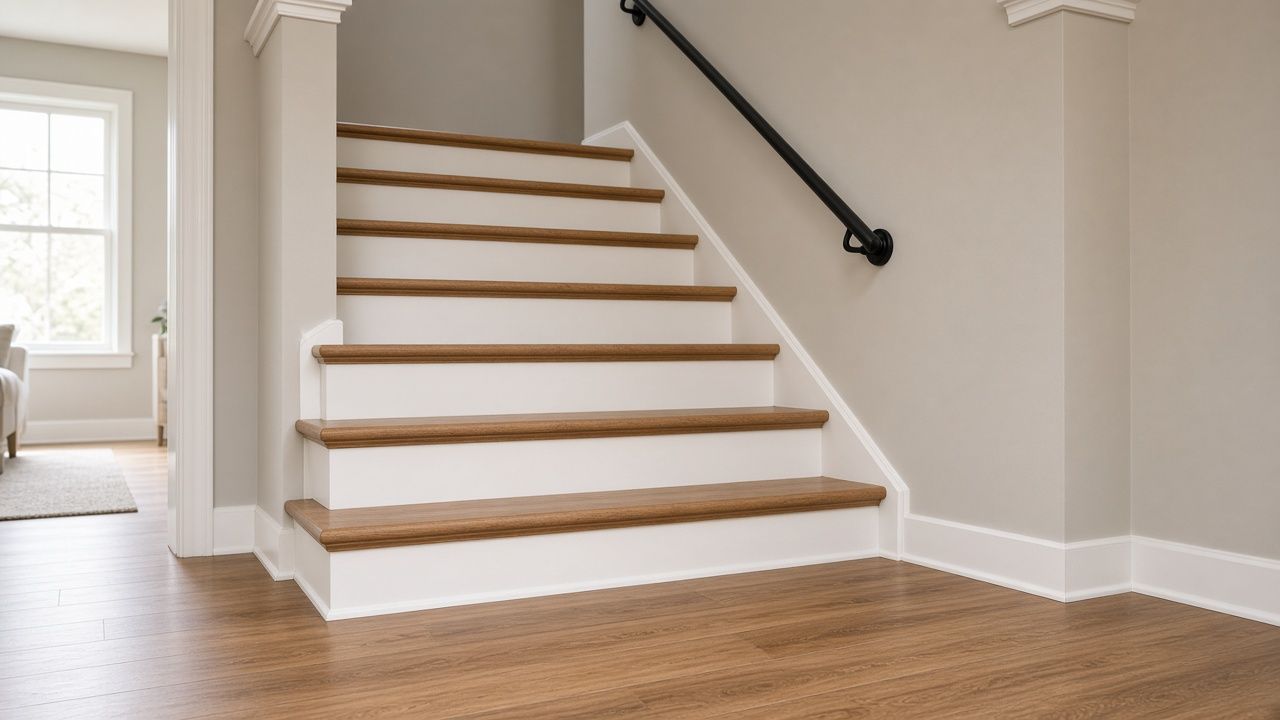
Stairs are the room worth pushing hardest on. Stair treads and nosings take some of the highest per-step wear in a two-story home, because every single trip up or down lands on the same few inches of pile. Pile crushes on treads faster than anywhere else in the house, and stairs are also the hardest place to replace carpet later: more labor per square foot, transition work at top and bottom, and usually the question of working around rail systems. For households who plan to stay in the home, prioritizing the stairs during an early upgrade is one of the more consistently sensible calls on an estimate. Hallways and connecting traffic routes belong in the same conversation, since they are the highest-abrasion zones in most new builds.
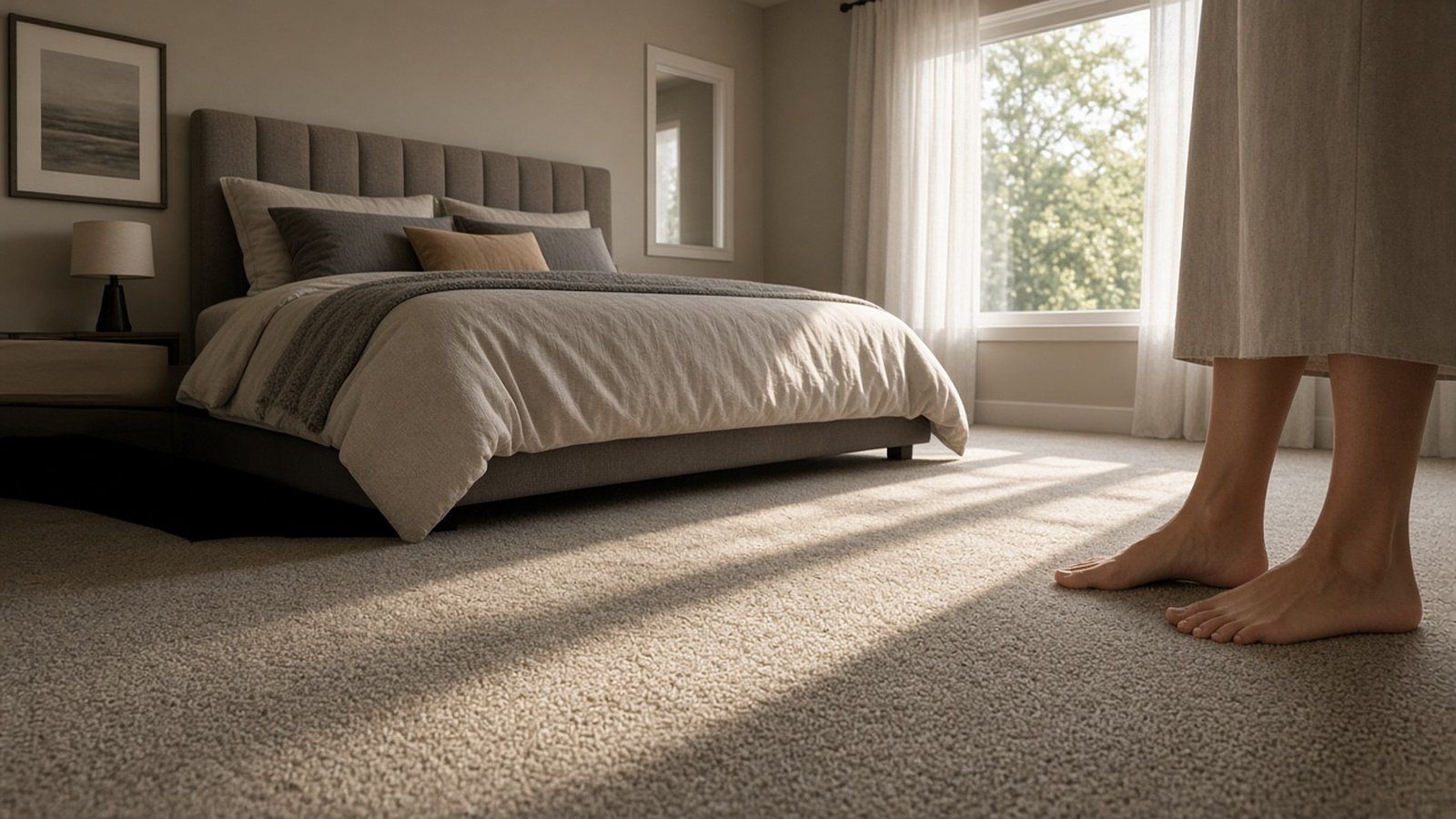
Bedrooms are the opposite case. A lightly used guest room or primary bedroom with two adults and no pets may get many years of acceptable service out of builder-grade carpet. This is where the basic tier genuinely earns its keep, and replacing it early is often money that would have worked harder somewhere else.
Basement rooms introduce a different variable entirely: moisture. Slab conditions, seasonal humidity, and Utah households running humidifiers through dry winters all change the risk picture for carpet on a concrete slab. In a basement, the upgrade decision may point away from carpet altogether and toward a waterproof flooring option, which we will get to below.
If you have kids or pets, the honest framing is that heavy pet households often weigh a hard-surface switch for the main living areas rather than a carpet upgrade. That comparison is its own topic, and our article on the best flooring for pets in Utah covers it properly, so this article leaves it there rather than re-arguing it.
Then there is the timing question that comes up on nearly every estimate: should we replace carpet before we move in or after? An empty house is genuinely easier on labor and furniture handling, and some homeowners prefer to get the dusty, disruptive work done before a single box is unpacked. The counter-argument is that living in the home for a few months teaches you your real traffic patterns, and that knowledge makes the keep-versus-upgrade map more accurate. Both approaches work well in practice. There is no single right answer, only the answer that fits how much uncertainty you are comfortable carrying into the decision.
What an Upgrade Actually Changes: Fiber, Construction, and Pad
When you move up from the builder tier, three separate levers move, and understanding them keeps you from overpaying for one number while ignoring the others.
The first lever is fiber type. Different fibers handle soil, spills, and sunlight differently, and the right choice depends on your household rather than on a ranking. Some fibers are more forgiving with soil hiding, some clean up more readily after spills, and some hold color better in rooms with strong afternoon sun. Our overview of carpet types is the place to compare them in depth.
The second lever is construction and twist. A tighter twist and a denser construction resist crushing in traffic lanes because the yarn stands up to abrasion instead of lying over. This connects directly to density: fibers packed closely together support one another. This is why a hallway and a bedroom can wear the same fiber at different rates, and why construction matters most in exactly the rooms where builder carpet fails first.
The third lever is padding, and it is usually the bigger surprise for homeowners. The pad under builder carpet is frequently the thinnest layer in the entire flooring system, and it is invisible, so nobody thinks about it until the day the carpet comes up. Upgrading pad affects how the floor feels underfoot, how it insulates, and critically, how the carpet itself wears over the subfloor, because the pad is the shock absorber that the pile rests on. We cover pad and underlayment in detail elsewhere, but the upgrade-level takeaway is this: a mid-tier carpet over a proper pad in a bedroom can outperform a premium carpet over thin pad in a hallway. The system matters more than any single spec.
That is also why shopping by face weight alone is a weak strategy. Homeowners often latch onto one number because it is the only number printed clearly on a sample, but face weight without fiber and construction context tells you very little. A heavier face weight in a loose, low-twist construction can flatten faster than a lighter face weight in a tight one. Compare the whole system, or better yet, let someone who installs these products daily compare it with you.
Pad thicknesses and densities are not prescribed here. Installers match pad to the carpet specification, the subfloor condition, and manufacturer requirements, and those requirements govern. This is exactly the kind of thing an estimator should evaluate on site rather than sight-unseen.
The related question, can you keep the existing pad and just replace the carpet, gets a practical answer: usually not recommended when you are upgrading. Pad compresses and ages with the carpet above it, and laying new carpet over worn pad undermines the upgrade you are paying for. But every home is different, and the estimator confirms the pad's actual condition once it is exposed. Treat that as guidance, not a rule.
When a Different Product Beats a Carpet Upgrade
Some of what homeowners call a builder carpet upgrade is really a product switch, and recognizing that early saves money and regret. New construction flooring decisions go well beyond carpet, and a few areas of the house are simply better served by hard surface from day one.
Entry areas, mudrooms, and kitchen-adjacent paths top that list. Wet boots, snowmelt, and ice-melt residue are hard-surface work, not carpet work. Sheet vinyl and LVP or laminate both handle that environment far better than any carpet grade, and the choice between them depends on your budget, the look you want, and the room. Basements and slab rooms bring the moisture question back into play, and there a waterproof core product deserves a look. A note of honesty here: waterproof refers to the core material and system, and real-world performance depends on the specific product and the install conditions, including how the floor is prepped and seamed. Bathrooms, laundry rooms, and mudrooms are rooms where carpet is rarely the right call regardless of grade.
Upstairs and in bedrooms, carpet usually stays the comfort winner in bedrooms, and hard surface is not the default push there unless a household has a specific reason. If you are weighing that comparison, our piece on the best flooring for bedrooms covers the trade-offs properly.
One caution before any hard-surface replacement: subfloor flatness and moisture testing matter, especially going over a slab, and the picture differs between Utah's older homes and newer construction. The EPA's guidance on moisture and mold is the right general principle: wet or damp subfloors should be addressed before you cover them, not after. Follow the flooring manufacturer's requirements for testing and prep rather than generic internet thresholds. When prep work is needed, subfloor repair is a normal part of the process, not a surprise.
What to Expect: Measurement, Prep, and Installation Day
Keeping this brief because the installation experience overall is its own topic, here is the upgrade-specific version.
The free in-home estimate starts with measuring each room and the stairs, but the more valuable part is the evaluation: checking the existing pad and subfloor, reviewing stairs and transitions, and talking through product selection in the context of how your household actually moves through the house. Traffic patterns you have observed living there are exactly the input that makes the keep-versus-upgrade map accurate.
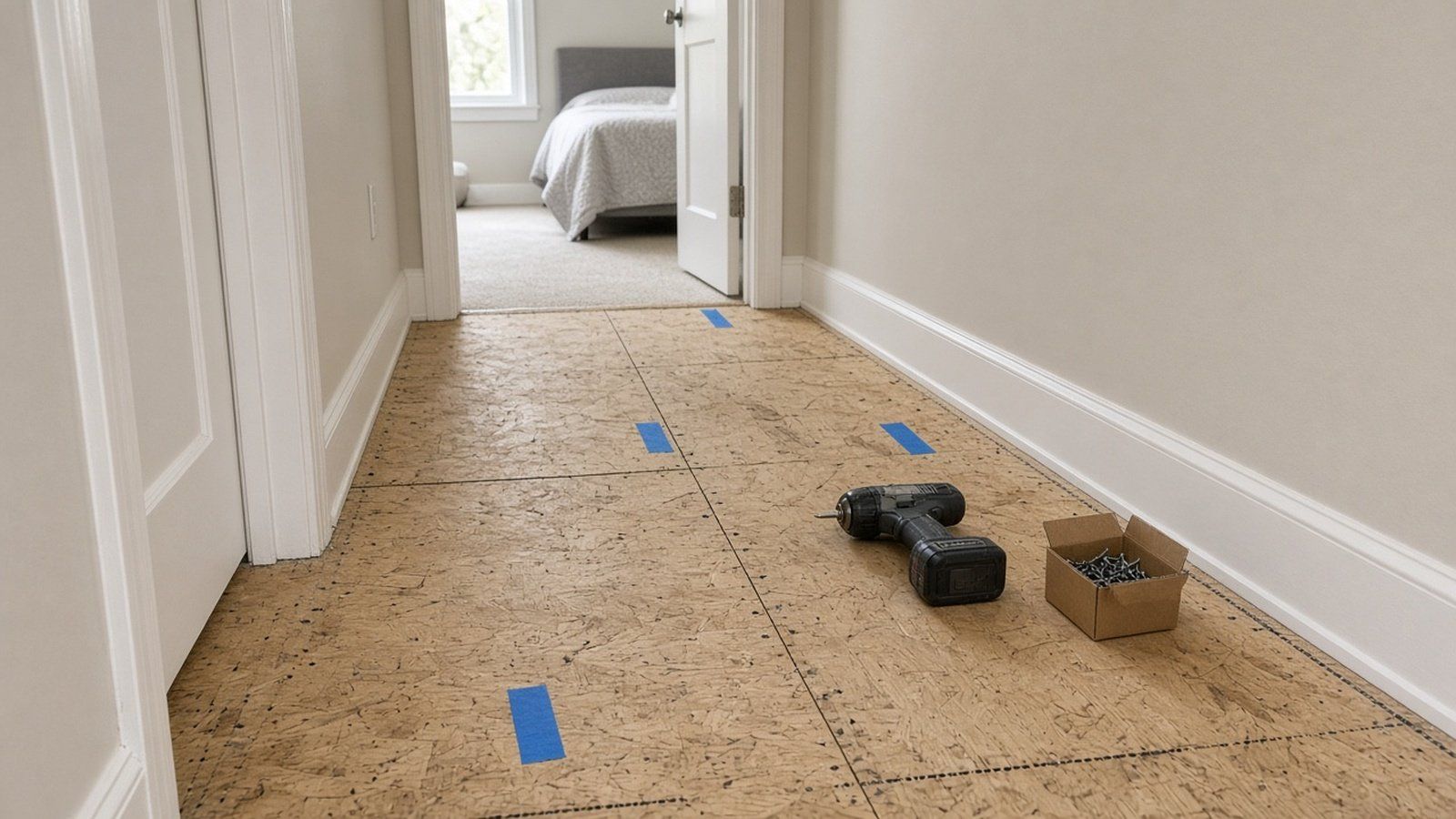
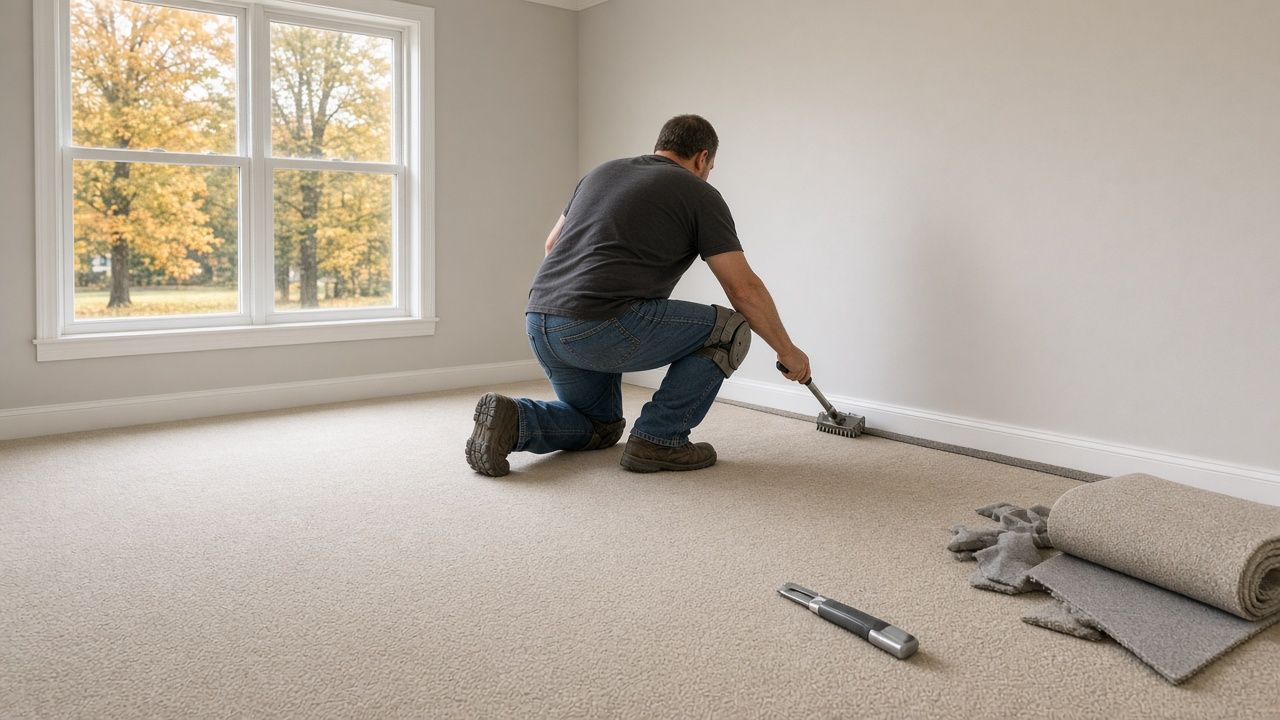
On installation, expect furniture coordination, removal of the old carpet and pad, and then a subfloor inspection once the old floor is up. Issues found at this stage are common and normal, especially in newer builds: construction debris, staples left from the original install, and minor flatness problems all surface once the carpet is gone. Finding them is a feature of the process, not a problem with your home.
A sequencing tip: doing upgrades room by room or floor by floor lets a family stay in the house during the work. Whole-house at once is faster overall but more disruptive day to day. Neither is wrong. Also expect attention to the transitions where new carpet meets existing hard surface; that detail is what makes a partial upgrade look intentional rather than patched together.
Common Mistakes Homeowners Make
Assuming all the carpet in the house is the same and replacing everything uniformly. Rooms wear differently, and a targeted plan usually serves the household better than a uniform one.
Upgrading carpet while reusing the cheapest pad to save money on the invisible layer. The pad is the shock absorber for the entire system, and shortchanging it quietly degrades the carpet you just paid to improve.
Shopping by a single spec number. Face weight on a label is one input among several, and comparing it in isolation leads to confident purchases that perform worse than cheaper, better-constructed alternatives.
Waiting until traffic lanes are visibly worn. Urgency narrows options, and decisions made on a deadline are rarely the ones you would make with room to breathe.
Ignoring the stairs because they are just stairs. In a two-story home, stairs take some of the highest per-step wear in the house, and they are the most disruptive place to redo later.
Skipping a subfloor check before installing new carpet over a squeaky or uneven area. New carpet will not hide what the subfloor announces; it will faithfully broadcast it for the life of the floor.
Questions to Ask Before You Decide
Bring these to your free in-home estimate. They are good questions to work through during the visit.
- Which rooms show actual wear versus wear that is acceptable for our household?
- What fiber and construction fit our traffic, kids, and pets?
- What pad is appropriate for the product and the subfloor?
- Does the subfloor need repair or flattening, especially on the stairs?
- Should any rooms switch to LVP, sheet vinyl, or a waterproof-core product instead?
- What is the sequencing plan so we can live in the house during the work?
- What ongoing care does the new carpet need, following manufacturer-recommended cleaning? The Carpet and Rug Institute's cleaning and maintenance guidance is a reliable reference for maintenance best practices.
Get a Straight Answer on Your Builder-Grade Carpet
The whole decision comes down to three honest questions: which rooms genuinely need better carpet, which ones are fine as they are, and where a different product would serve your household better than any carpet grade. You do not have to answer them alone or guess from a sample board in a showroom.
Our West Jordan team, licensed and insured under Flooring Contractor License S220, provides free in-home estimates for homeowners across Salt Lake County and the greater Wasatch Front. We will walk your rooms with you, check the pad and subfloor, and tell you plainly where the builder carpet can stay and where it should not. Schedule your free in-home estimate through our contact page or call (801) 907-1908.
Recent Posts