SPC vs WPC Flooring: Pick the Right Core for Moisture and Traffic

Admin • October 6, 2026

Share this article

You lay two sample planks side by side on the basement slab. One feels cool and stiff when you tap it, dense like a countertop. The other feels warmer, with a slight give when you slide a dining chair over it. Tip a water bowl on both overnight, and in a typical sample walkthrough the water still beads while neither plank shows swelling. The difference is the middle layer, the core. In an spc vs wpc decision, SPC (stone-plastic composite) is the denser, more rigid core, and WPC (wood-plastic composite) is the lighter, more cushioned core. Both wear the same family of vinyl surface, so the core drives how the floor feels, how it handles furniture weight, how it behaves around moisture, and how much prep your subfloor needs.


SPC vs WPC: What Each Core Actually Is


The Core Is the Layer That Changes Everything


Most rigid-core luxury vinyl planks are built in a similar stack. On top sits a protective wear layer, the clear coating that takes scratches and scuffs. Below that is the printed design layer. Then comes the core, the thick middle layer that gives the plank its body. Many products add an attached backing or pad underneath.


Both SPC and WPC are rigid core products, which means the plank holds its shape instead of flexing the way older sheet vinyl could. Two planks can look identical on the surface and still behave differently in your home. The surface is the same family of vinyl. The core is the decision. Our waterproof flooring page covers waterproof luxury vinyl plank with WPC and SPC cores, plus waterproof laminate options.


SPC, the Stone-Plastic Composite Core


An SPC core blends mineral (stone) powder with polymers. The result is a dense, firm, stable plank. Underfoot you notice a solid, hard feel. The planks stay straight and resist bending, which is why they handle heavy loads and cooler slab conditions so well.


Brands often trademark their own core names. Ignore the clever label on the front of the sample and look at the construction notes on the spec sheet.


WPC, the Wood-Plastic Composite Core


A WPC core is foamed, with tiny air pockets that make the plank lighter and softer underfoot. You notice warmth, cushion, and a slightly quieter step. The vinyl layers on top are the same category of material as SPC; the comfort difference comes from what sits below the surface.


"Denser" and "more cushioned" are the useful shopping comparisons; exact composition details belong on the product documentation.


Feel, Warmth, and Sound Underfoot


WPC is the comfort pick. It is forgiving in bedrooms, play areas, and rooms where you stand for long stretches. If your household sits on the floor, WPC is generally kinder underfoot.


SPC is firm and dense, often cooler to the touch. That can feel refreshing in summer. On a winter slab it can feel chilly under bare feet, and an area rug solves that in the rooms where it matters.


A denser core often reads as a more solid step, while a foamed core tends to soften footfall. Neither core is a soundproofing product, and exact acoustic behavior depends on the plank, any attached pad, and the room. Wasatch Front homes swing between dry heated winters and air-conditioned summers, and vinyl generally handles those swings well, while installers still leave the expansion gaps the manufacturer specifies.


The question we hear most is whether it will feel cheap or plasticky. Feel is product specific. A thin plank of either core can flex at the seams over an uneven subfloor, and that flex is what reads as cheap. That is usually a prep problem more than a core problem.


Moisture and the Waterproof Core: What Is Actually Promised


Both cores share a real promise: the core itself does not absorb water and swell the way wood-based floors do. A spill wiped up the same day typically leaves no swelling, cupping, or buckling. That is why both SPC and WPC show up in waterproof flooring conversations, with the core itself resisting water absorption.


What that promise does not cover matters just as much. Water entering from below (slab moisture or a plumbing leak inside a wall), water sitting at seams for extended periods, and flooding are different problems. The core resists water; the whole floor assembly is only as good as the prep and the conditions around it. Performance still depends on the specific product and the installation.


Wet-area installs may call for sealing at seams or edges depending on the product. Follow the product's installation instructions rather than a blanket rule.


Concrete slabs deserve attention in Utah. Slabs can wick ground moisture, and in spring our crews often see snowmelt add pressure to those conditions. The EPA's mold cleanup guidance is clear that moisture problems should be fixed at the source and that wet materials should be dried quickly, generally within 24 to 48 hours, to limit mold growth. Whether your rooms need a moisture barrier or slab testing is decided during the in-home estimate, with conditions checked in your actual spaces.


Traffic, Furniture Dents, and Long-Term Wear


SPC typically wins on heavy static loads: refrigerators, pianos, loaded bookcases, and dining sets that stay put for years. Density resists compression.


WPC trades some of that for comfort. Heavy furniture left in one place for years can leave compression marks in the foamed core. Felt pads under legs help, and occasionally shifting furniture a few inches may let some products recover.


One distinction matters in the spc vs wpc flooring debate: scratches and scuffs happen at the wear layer, and that layer is the same category of material across both cores. The core affects denting and structural stability, not scratch resistance. If scratch resistance is your top concern, the conversation is about wear layer, not core. Wear-layer details vary by product, so compare the exact options on your quote rather than shopping from general numbers.


SPC vs WPC at a Glance


Here is a side-by-side look at the core trade-offs. The right pick still depends on your subfloor, moisture conditions, and how each room is used.

Attribute SPC core WPC core
Composition Mineral and polymer blend, dense Foamed composite, lighter
Feel underfoot Firm, solid Cushioned, forgiving
Warmth underfoot Often cooler Often warmer
Heavy furniture Typically resists dents better Can compress under long-term static loads
Cool concrete slabs Usually the favored pick Workable, verify conditions
Comfort-priority rooms Fine, firmer feel Usually the favored pick
Installation approach Commonly floated; glue-down available for LVP Commonly floated; glue-down available for LVP


Which Core Fits Your Home


Think in conditions, not generic room labels.


Where SPC Usually Wins


Concrete slabs on grade or in basements often favor the dense, stable SPC core, especially where the surface already feels cool and hard underfoot. Slab moisture still gets verified, never assumed. Entry zones, kitchens, and mudroom-type areas with slush, boots, and frequent spills also suit SPC, as do homes with heavy furniture and the busiest family routes.


Where WPC Usually Wins


Bedrooms and upstairs rooms over wood subfloors are classic WPC territory, where warmth and quiet matter for bare feet. Standing zones reward the cushion. Sound-sensitive households often prefer the softer footfall in hallways and on upper floors.


When It Is a Close Call


Whole-home installs where one consistent feel matters are the classic close call. Different cores can be bridged with transition strips and stair nose (services we install), but most homeowners standardize on one core. Pricing depends on the specific products you choose and follows measurement, so the useful question is total fit for your home, not a sticker comparison between core labels.


Subfloor Prep: The Part That Decides the Floor's Fate


Rigid cores telegraph subfloor flaws. A dip, a hump, or a plywood seam can read through as peaking seams or visible lines. Manufacturers publish flatness tolerances for their products, and the crew verifies your subfloor against them on site.


For concrete, that can mean leveling, patching, and a moisture barrier where conditions call for one. For wood subfloors, squeaks, loose panels, and seam height differences get corrected first. We list subfloor repair as a service because prep is that central to a good outcome.


Both floating and glue-down methods are available for LVP, along with transition strip and stair nose installation. Core choice, room conditions, and subfloor condition influence the method, and that decision happens at the estimate.


Prep is where floors succeed or fail. A strong core over an unprepared subfloor can still look and feel like a weak floor. The surface under your floor decides more than the label on the box.


When a Different Floor Is the Better Answer


Sometimes the honest recommendation is not plank vinyl. Sheet vinyl has very few seams for wet work zones, and carpet still wins on warmth and softness in many bedrooms and on stairs. Waterproof laminate stays on the table when you want a wood look with a waterproof core.


Your Free In-Home Estimate: What to Cover When We Measure


Measurement and the estimate are free. Recommendations can include waterproof LVP in both WPC and SPC cores, waterproof laminate, laminate, sheet vinyl, and carpet. Bring these questions to the appointment:


  • Subfloor type in each room (concrete slab or wood)
  • Moisture history (past leaks, snowmelt at entries, seasonal humidity)
  • The heaviest furniture that will sit on the floor, and for how long
  • Rooms where spills are likely versus rooms where comfort leads
  • Stairs and doorway transitions, including stair nose needs
  • Spec review together: wear layer and core details for the exact products on the quote
  • Feel preference: walk samples in your own lighting on your actual subfloor


We are based in West Jordan and serve Wasatch Front communities. The service areas page has the coverage picture.


Pick the Core in Your Own Home, Not in a Showroom


Showroom lighting and a display rack cannot tell you how a core feels on your slab or over your wood subfloor. Your home can. Call (801) 907-1908 or use the Contact page to schedule a free in-home estimate. We will measure, check the subfloor, talk through moisture and traffic, and recommend the core that fits how your household actually lives. Residential Flooring Solutions is licensed and insured (Flooring Contractor License S220), based in West Jordan.


Recent Posts

Open-concept living room and kitchen with continuous medium-brown wood-look plank flooring
By Admin • October 1, 2026
Living room flooring guide: compare carpet, LVP, laminate, and waterproof options for traffic, sound, and open layouts. Free in-home estimate.
Modern mudroom entryway with wood door, coat hooks, boots, and a durable water-resistant floor
By Admin • September 30, 2026
Mudroom flooring that survives salt, grit, and wet boots. Compare sheet vinyl and waterproof LVP for Utah entries. Free in-home estimate.
Home office desk chair on durable residential flooring
By Admin • September 29, 2026
Home office flooring that holds up under desk chairs and spills. Compare LVP, carpet, and sheet vinyl for Utah WFH rooms. Free estimate.
Front-loading washer and dryer in a bright laundry room with gray wood-look LVP flooring
By Admin • September 12, 2026
Laundry room flooring that handles moisture and appliances: sheet vinyl vs waterproof LVP, prep tips, free estimates from West Jordan.
Red patterned carpet covering an indoor staircase with a wooden railing
By Admin • September 8, 2026
Compare the best carpet for stairs in Utah homes, including fiber, pile, padding, pet safety, and professional installation.
White bathtub and gray stone-look flooring in a modern bathroom
By Admin • September 8, 2026
Learn which waterproof flooring works in Utah bathrooms, how prep and seams affect performance, and what to ask an installer.
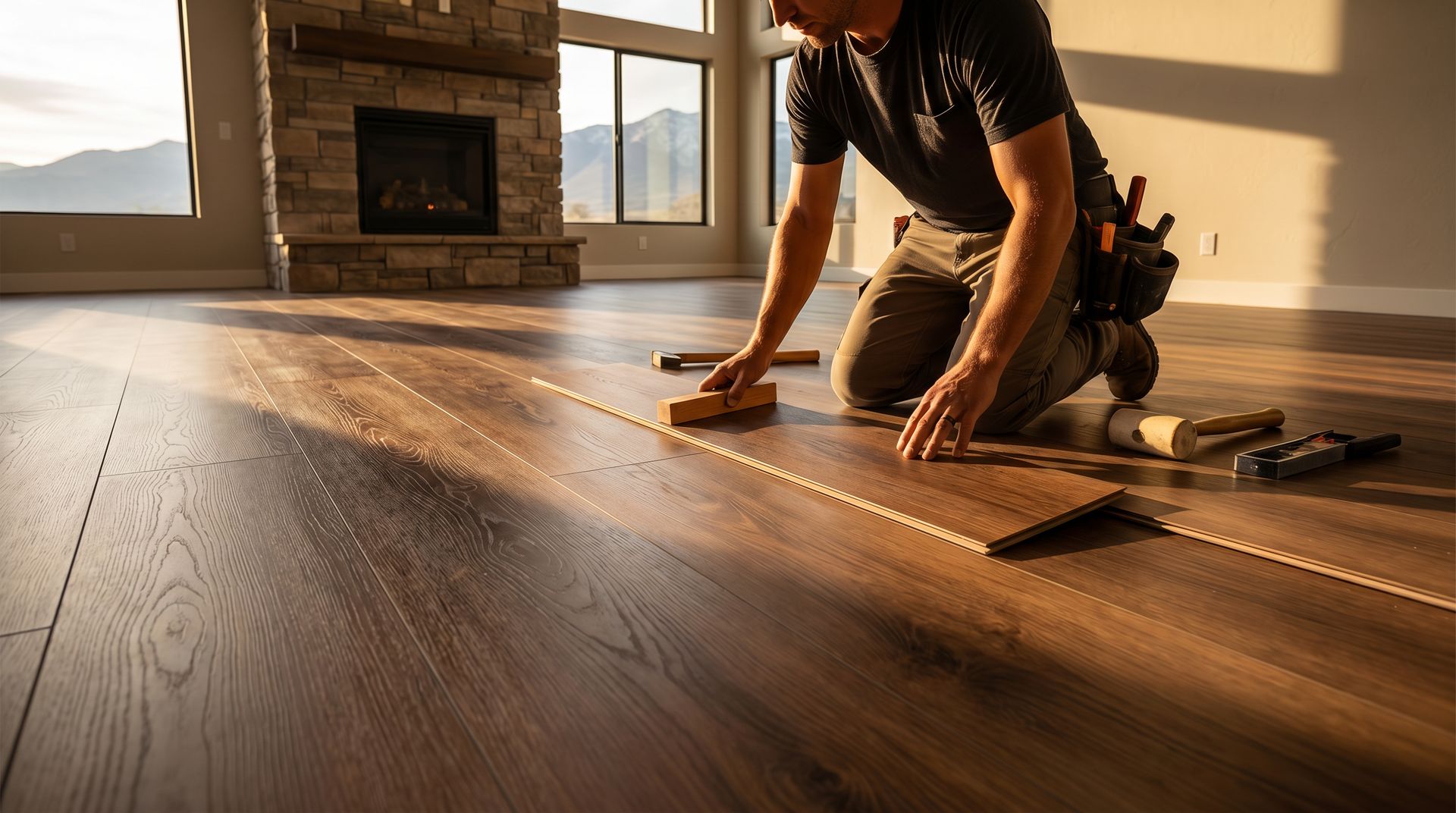
Residential Flooring Solutions installer laying wood-look LVP flooring in a finished residential roo
By Admin • September 7, 2026
Choosing the best flooring for basements means matching moisture risk, use, and prep. Compare options that hold up below grade.
Assorted tools, including pliers and a tape measure, on a white tiled floor near a box.
By Admin • September 1, 2026
Learn what to expect during a flooring installation. from preparation and timelines to walkthrough checks. complete guide for Utah homeowners from Residential Flooring Solutions
Three cats on a wooden floor; one sits in a cardboard box under a white table.
By Admin • August 27, 2026
Find the best flooring for pets in Utah. Compare SPC LVP, carpet, and waterproof options for dogs and cats in Wasatch Front homes.
Rows of colorful patterned ceramic cups displayed against ornate mosaic tilework.
By Admin • August 24, 2026
Compare carpet, LVP, laminate, sheet vinyl, and waterproof flooring to choose the right material, prep, and installation for your Utah home.
Show More