Home Office Flooring: What Holds Up Under Desk Chairs, Spills, and All-Day Use
After a few years of working from home, you start to notice things about your home office flooring that you never paid attention to before. The carpet pile is crushed in a smooth arc where your desk chair rolls the same two feet, all day, every day. There is a faint ring on the floor where you set your coffee down during a call and got pulled back into the conversation. If your office is on hard flooring, maybe you have noticed your voice sounding hollow on video calls, or a small scratch you can trace back to a caster with a burr on it. These are the real signals, and they tell you something important: choosing a floor for this room is not the same as choosing flooring for any other room in your house.
For most home offices, a rigid-core luxury vinyl plank (LVP) or a waterproof flooring system gives you the best combination of caster durability and spill resistance. Sheet vinyl is the practical choice for budget-conscious nooks and basement spaces. Carpet wins when comfort and quiet matter more to you than easy rolling. Laminate can work, but it has real limits around moisture. Which one is right for you depends on which room in your Wasatch Front home became the office, whether you use a chair mat or bare casters, and whether the space sits above grade or in a basement.
General information only. Flooring performance, moisture behavior, and installation outcomes vary by product, subfloor condition, and installation quality. Confirm suitability for your room during an in-home estimate.
What a Home Office Floor Actually Has to Survive
The Daily Wear Pattern of a Rolling Desk Chair
A desk chair does not travel across a room the way foot traffic does. It rolls back and forth in the same short arc, hundreds of times a day, five days a week, year after year. That concentrated repetition in one spot is harder on soft flooring than years of normal walking, and it is the single biggest flooring decision driver in a home office. Most homeowners do not realize this until they see the wear pattern show up in their own home.
What that wear looks like depends on the surface. On carpet, the pile crushes in the roll path and stops springing back. On soft or low-quality vinyl, you can see wheel tracks and dents set in. Hard surfaces with a durable wear layer generally hold their appearance best under this kind of use.
A chair mat protects any floor, but plenty of people dislike the look or the feel of one underfoot, so a mat is not mandatory. If you skip the mat, your material choice matters more. Either way, check your chair manufacturer's guidance on caster types, because the wrong wheel can undo a good flooring decision.
Spill Zones Are Predictable in a Home Office
Home office spills cluster in a tight radius: coffee at the desk, a water bottle, occasionally lunch eaten between meetings. The volume is low compared to a kitchen, but it happens in the same spot over and over. Repeated small spills in one location can actually be harder on a floor than a single large spill, because liquid keeps revisiting the same seams, plank joints, or carpet fibers instead of getting wiped up once and forgotten.
Where your office sits changes how much a spill matters. In an upstairs spare bedroom, a spill is usually just a cleanup. In a basement nook, that same spill interacts with the slab environment below, which is a different conversation.
All-Day Use Means Comfort, Noise, and Temperature
A living room gets used a few hours an evening. A home office floor is occupied eight or more hours a day, every weekday, and that changes three things.
First, sound. Hard flooring reflects your voice; carpet and some underlayments absorb it. If you take calls in the room, echo on hard floors is one of the most common complaints after an install, and one of the most common post-installation regrets. Second, underfoot comfort. Standing up from your chair and moving around on hard flooring all day feels different than the give of carpet and pad. Third, temperature. Carpet feels warmer underfoot in a Utah winter, and hard surfaces, especially in basement nooks, can feel cold, which underlayment can partially address.
And if your office doubles as a guest room part of the year, weight all of this differently. A room that still needs to feel like a bedroom can justify different choices than a dedicated workroom.
Home Office Flooring Options Compared
This is where the home office flooring question gets a real answer, product by product, measured against chair wear, spills, and all-day use. We do not quote prices here because your floor is priced after measurement, and we do not invent wear-layer, caster, or acoustic ratings because those belong to manufacturer documentation for the specific product you choose.
Luxury Vinyl Plank (LVP) and Rigid-Core Waterproof Systems
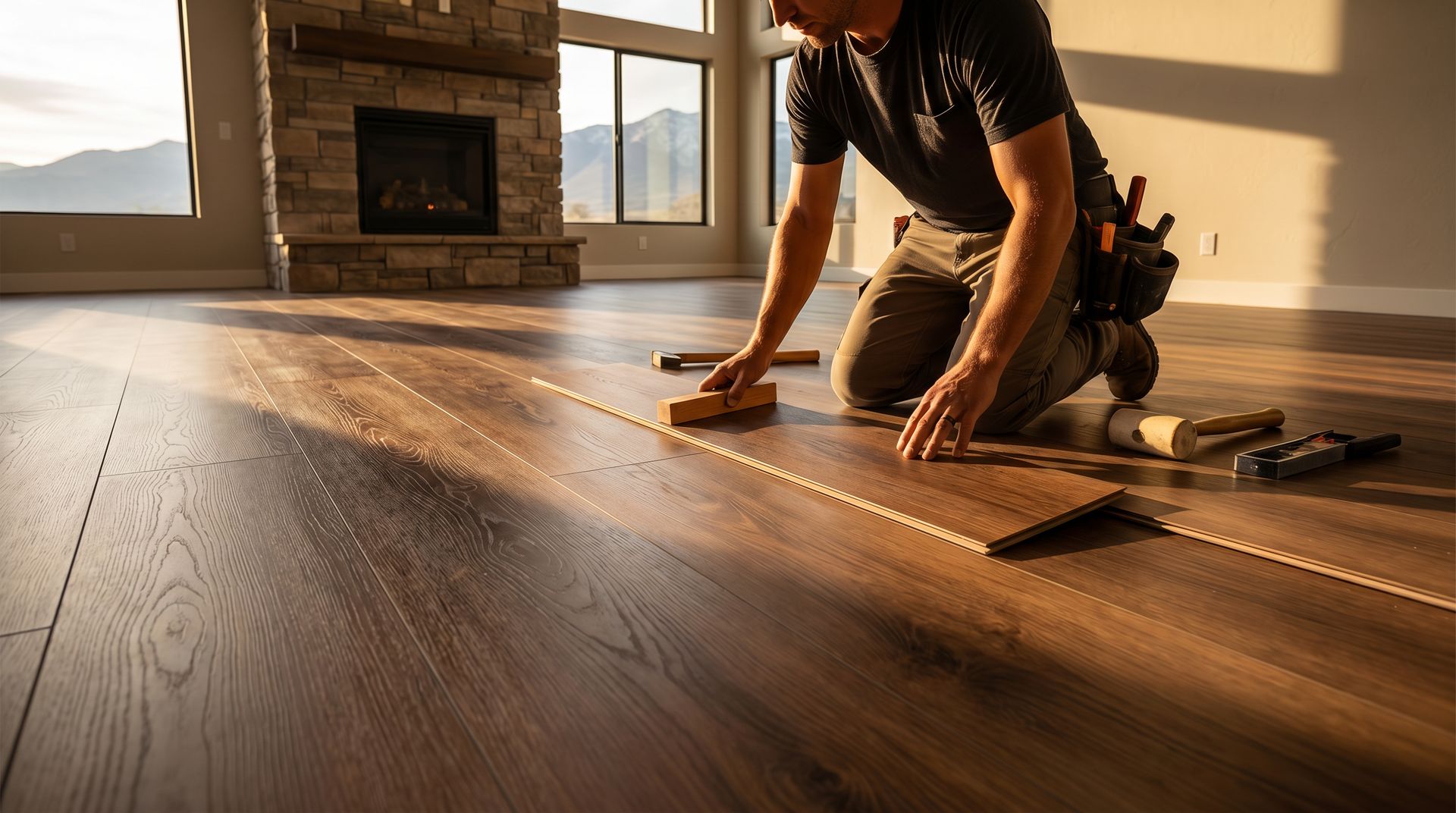
For most home offices, LVP is the default answer, and there are practical reasons why. The rigid core and surface wear layer handle concentrated caster rolling without crushing the way soft surfaces do, and surface spills wipe up with a cloth. It also looks like a residential floor rather than something out of an office park, which matters when the office is a converted spare bedroom.
On the waterproof question, precision matters. Waterproof-core products are designed to resist surface moisture, and that resistance is a genuine advantage in a spill-prone desk zone. But performance depends on the specific product, the seams and transitions, and the installation conditions, including what happens at the perimeter of the room. No floor is a reason to stop cleaning up spills. You can explore the product range on our LVP and laminate flooring page and our waterproof flooring page.
Can you skip the chair mat on LVP? Many homeowners do, and on a well-installed floor with clean, smooth casters, the floor generally handles it. Keep in mind that debris under your wheels acts like sandpaper on any hard floor, so a soft caster or a mat is the cautious choice. Thicker wear layers generally resist wear better, but the right product selection happens after someone has actually looked at your room, not before.
On noise: LVP with an attached pad or underlayment is quieter than bare hard flooring, but it will not deaden a room the way carpet does. For heavy call use, an area rug under the desk zone is a practical, reversible fix that many homeowners choose.
Where it fits best: spare bedrooms, main-floor studies, and basement nooks where moisture is a consideration.
Carpet: When Comfort and Quiet Win
Carpet in a home office is not a mistake. It is a trade. You get warmth, quiet for calls, and comfort underfoot for long days, and in exchange you give up easy rolling and easy spill cleanup.
From an installation perspective, some general guidance holds up. Lower-pile, denser constructions tend to resist caster crushing better than tall, loose pile. Loop and dense cut constructions tend to hold up in the roll path better than plush, deep-pile styles. On the other side of the trade, casters can catch and snag on loop pile edges over time. If you want carpet in a daily-use office, a chair mat with the right backing for carpet, gripped rather than smooth, is standard practice, and a longer mat that covers the entire roll arc protects the pile crush zone.
For spills, act quickly and blot rather than scrubbing. The Carpet and Rug Institute publishes practical spot-cleaning guidance that is worth a read if you go the carpet route. Spill history also matters more if kids or pets share the office space.
Where carpet fits best: the guest-room office that should still feel like a bedroom, quiet-focused call rooms, and anyone who dislikes hard flooring underfoot for eight-hour days. Our carpet installation page covers the process, and our types of carpet page is useful if you want to see construction differences side by side.
Sheet Vinyl: The Practical Budget-Grade Contender
Sheet vinyl quietly performs very well in home offices, and it is underrated for this room. In a small spare room or basement nook, a single sheet can often cover the whole floor with seams only at the doorways. That seam-minimized surface is a genuine spill advantage over plank formats in a room where the same square foot gets spilled on repeatedly. Add a resilient surface that handles caster rolling and cleanup that could not be simpler, and you have a floor that suits basement nooks and utility-adjacent spaces where practicality matters.
The honest limits: appearance and texture options differ from plank products, edges and seams remain the vulnerable points, and underfoot comfort is firmer than carpet. If the wood-look aesthetic is a priority for you, look at the sheet vinyl page alongside LVP before deciding.
Laminate: Where It Works and Where It Falls Short
Laminate deserves a brief, honest treatment here because it has one clear office-relevant weakness: moisture. Spills that sit at plank joints can damage laminate in ways that a waterproof-core product resists, and repeated spills in the desk radius are exactly that failure mode. If you are spill-prone, or the office is in a basement, look toward waterproof-core options or sheet vinyl instead.
What laminate does well is provide a firm, stable rolling surface with a hard wear surface that resists caster marks. In a dry, above-grade office with a careful occupant, it can perform fine. You can compare the two product families on the LVP and laminate flooring page.
A Quick Room-by-Room Lens
- Spare bedroom that doubles as an office: Appearance and resale matter here. LVP and carpet both work; decide based on whether rolling or quiet is the bigger priority.
- Basement nook converted to an office: The slab environment, possible prep needs, and underfoot comfort push toward waterproof-core LVP or sheet vinyl. Carpet in basements has its own set of considerations covered in our best flooring for basements guide.
- Dedicated study or main-floor room: All four products are candidates. Weight the decision by call volume and chair use.
| Product family | Chair / caster wear | Spill behavior | Noise for calls | Underfoot comfort | Best-fit home office | Main caution |
|---|---|---|---|---|---|---|
| Rigid-core LVP / waterproof systems | Strong on a durable wear layer with clean casters | Surface spills wipe up; performance depends on product and install | Quieter with pad or underlayment than bare hard floor; not as quiet as carpet | Firm with some give from pad | Spare bedrooms; main-floor studies; basement nooks | Debris under wheels can scratch; echo without a rug or soft surface nearby |
| Carpet | Crush risk in the roll path without a mat; dense lower pile holds up better | Absorb and hold liquid; blot quickly | Best absorption for video calls | Warmest and softest for long days | Guest-room offices; quiet call rooms | Needs a carpet-backed chair mat for daily rolling |
| Sheet vinyl | Resilient surface handles rolling in small rooms | Few seams in a small room reduce spill entry points | Moderate; firmer than carpet | Firmer than carpet; quieter than bare hard floor | Basement nooks; secondary offices; budget-conscious rooms | Appearance options differ from plank; edges remain vulnerable |
| Laminate | Firm rolling surface; resists caster marks well | Moisture at joints is the weak point | Similar to other hard floors | Firm | Dry, above-grade offices with careful occupants | Repeated desk-zone spills and basements are poor fits |
Home Office Flooring Prep and Installation: What to Expect
Subfloor Condition Matters More Than You Might Expect
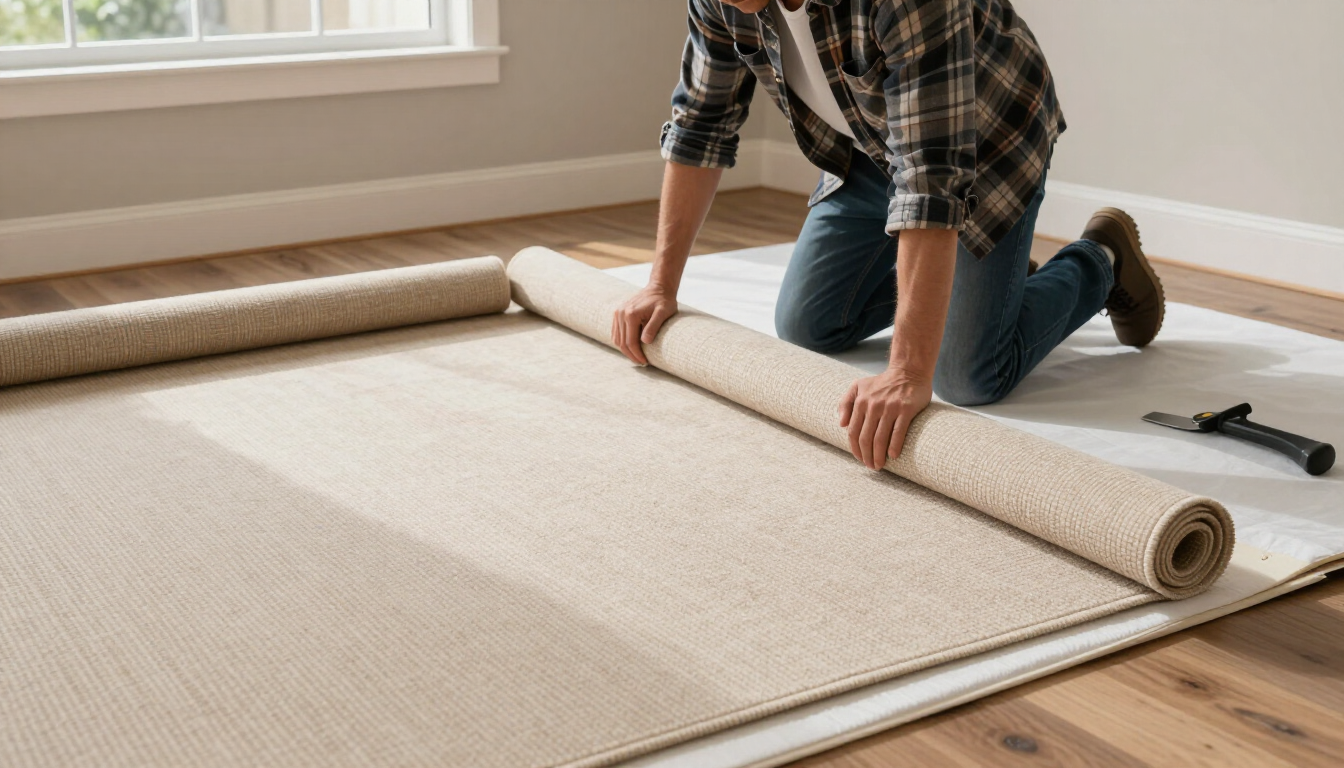
A rolling chair amplifies subfloor imperfections. Dips and humps you never noticed under carpet can telegraph visibly through LVP, and uneven spots affect how planks lock together. If the floor needs work, subfloor repair happens before the new flooring goes down, not after.
The good news is that a home office is often one of the easier rooms to work in, because the furniture profile is predictable. Even so, plan for the room to be cleared and the desk relocated during installation. In a basement nook, the slab should be assessed for moisture before a rigid-core or sheet product goes down; the specifics depend on the product system and the slab itself.
This is also where the in-home estimate earns its keep. The room gets measured, the subfloor gets looked at, and any prep needs get identified before a product recommendation is finalized.
Underlayment, Padding, and the Noise Question
General guidance only here, because underlayment choices are product-specific. Under LVP, attached pads versus separate underlayment affect both sound and comfort, and the manufacturer's installation documents govern. Under carpet, the pad does a lot of the quiet, comfortable work in an office, and a denser pad generally supports the carpet better in high-traffic roll zones. If your room is call-heavy and you want hard flooring, an area rug in the voice zone is the practical fix homeowners choose most often. Manufacturer specs and an in-home look at the room beat prescribed numbers that may not apply to your product.
Transitions, Doorways, and the Chair Roll Path
One detail homeowners rarely think about until it is too late: where the office floor meets the hallway. A rolling chair hitting a transition strip repeatedly can wear that edge over time, so plan your desk position relative to transitions. If the office shares an open path with adjacent flooring, matching heights matter for both appearance and chair behavior.
Common Home Office Flooring Mistakes to Avoid
- Choosing flooring for looks only and ignoring the chair. The roll arc is where the floor either survives or shows damage. Decide mat-or-no-mat first, then pick the material.
- Hard or damaged casters on a floor that cannot take them. Worn casters with burrs act like sandpaper on hard surfaces. Replacing casters or following your chair manufacturer's caster guidance protects any floor you choose.
- Deep plush carpet in a daily-use office without a mat. Pile crush in the roll path is nearly guaranteed. If you love plush carpet in that room, plan for the mat.
- Skipping moisture checks in a basement office. A slab that has never had flooring on it, or had old flooring removed, deserves an assessment before anything goes down.
- Assuming waterproof means nothing can ever go wrong. Waterproof-core products resist surface moisture, but performance depends on the product, seams, and installation conditions. Spills should still be cleaned up promptly.
- Ignoring the noise factor until the first week of calls. Echo on hard flooring is one of the most common regrets after a home office install. Decide up front whether the room doubles as a call studio.
When a Different Room Is the Better Fit
If the space you are planning is really a basement being finished, see best flooring for basements. If your priority is a pet-proof decision for the whole house, see best flooring for pets in Utah. If the office shares a path with a laundry area, see laundry room flooring. Those rooms have their own decision logic, and this guide stays focused on the desk-chair, spill, and all-day-use profile of a residential home office.
Your Home Office Flooring Estimate Checklist
If you are ready to move from comparing products to deciding on one, here is what to have ready for a free in-home estimate on your home office floor:
- Which room is becoming, or already is, the office, and whether it is above grade or in a basement
- Whether you use a rolling chair, and whether you plan to use a chair mat
- How much call time the room sees, since that shapes the noise conversation
- Your spill history, and whether kids or pets share the space
- Any known floor issues: dips, old adhesive, squeaks, or prior water events
During the visit, the space gets measured, the subfloor condition gets looked at, and product options get reviewed for the room. That is the moment when general guidance turns into a specific answer for your actual floor.
If you are weighing options for home office flooring anywhere along the Wasatch Front, from a West Jordan spare bedroom to a Utah County basement nook, a free in-home estimate is the simplest way to get a product and prep answer for your room. Call Residential Flooring Solutions at (801) 907-1908 or use the Contact page to schedule. Flooring Contractor License S220, licensed & insured.
Recent Posts