You are standing in front of the washer on a Saturday morning, and the room is quietly telling you what it does to floors. There are dried detergent drips by the door, gray lint collecting in a line along the baseboard, and a supply hose behind the machine that nobody has thought about since the day the washer was pushed into place. That hose is why laundry room flooring deserves its own decision instead of whatever is left over from the hallway.
The best laundry room flooring tolerates standing water from a leak long enough for you to catch it, carries the dead weight and vibration of the machines, shrugs off detergent and lint, and installs over a subfloor that is flat where the washer sits. Residential Flooring Solutions installs
sheet vinyl,
waterproof flooring, and
LVP and laminate for Wasatch Front homes from its West Jordan base. This guide is general information for planning. How any floor performs depends on the specific product, your subfloor, and install details confirmed on site.
What makes a laundry room floor different
The laundry room gets light foot traffic, which makes it look easy on flooring. It is not. Low traffic is offset by concentrated water risk, heavy stationary loads, and constant vibration, a combination almost no other room puts together.
Water arrives from three directions, not one
First, the supply hoses behind the machine, which fail either dramatically or as a slow drip that runs for weeks behind the washer. Second, the drain standpipe, the vertical pipe your drain hose empties into, which can clog and overflow mid-cycle. Third, ordinary life: detergent, bleach, fabric softener, and water sloshing out of a basket. Then there is a fourth factor people forget, humidity. A poorly vented dryer pushes warm, damp air into the room continuously, and that moisture settles into every surface, including the floor and the lint on it.
Do you really need waterproof flooring in a laundry room? Every laundry room needs genuine water tolerance. The fuller performance of a waterproof system matters most when the room sits on a second floor, when the supply hoses have been in place for years, or when the room has a leak history.
The load is stationary, then it vibrates
A washer mid-cycle is a heavy, constant load that almost never moves, and then it vibrates. Dips or slopes in the subfloor let a machine walk across the floor. Walking transmits more vibration, and vibration works joints and seams loose over time. Flatness matters more in this small room than in almost any other room in the house.
Hard water, ice melt, and the laundry-mudroom combo
Hard water spots and dried detergent film show more on dark finishes, so plan cleaning expectations before you lock in a deep color. In many Wasatch Front homes, the laundry room sits off the garage or a side entry, which means it absorbs winter grit, sand, and ice melt from boots. A walk-off mat, prompt wipe-ups, and the manufacturer's care guidance for your specific product are the practical defenses.
Small room, high stakes
The footprint is small, which cuts both ways. Upgrading the material is often practical here when it would feel like overkill in a living room. It also concentrates risk: when water escapes in a small enclosed space, it has nowhere to go but into the subfloor and toward the walls. Treating the room as an afterthought is how small leaks turn into expensive repairs.
Laundry room flooring options: what holds up and why
Compare options on water tolerance, appliance loads, grit resistance, feel underfoot, and install considerations. Keep the decision laundry-specific rather than replaying a general product debate.
Sheet vinyl: the fewest seams in the room most likely to flood
Sheet vinyl installs as a continuous sheet in most laundry rooms, which means no plank seams for spilled water to find. Edge details such as sealed or coved edges are installer decisions based on the room and product. It has been the utility-room answer for decades for good reason, and it handles both concrete slabs and wood-framed subfloors.
Two cautions. If the room is wider than the roll, a seam is unavoidable and its placement matters. And when appliances roll across the surface on a dolly, the floor needs protection. See the
sheet vinyl page for how RFS positions this product in kitchens, bathrooms, laundry rooms, and utility spaces.
Waterproof flooring systems: rigid-core plank built for wet rooms
Rigid-core plank, often sold as luxury vinyl plank, is built around a stiff composite core (commonly WPC or SPC style constructions) with a waterproof core. Strengths in a laundry room are real: plank visuals that match an adjoining hallway, a rigid core that carries appliance weight well, and a surface that stands up to tracked-in grit.
The caution matters just as much. A waterproof core protects the plank. It is not flood insurance. Click seams, perimeter edges, and wall lines are all places where standing water can find its way past the floor covering. Performance depends on the specific product, the attachment method, and the installation, which is why the manufacturer's installation instructions govern every claim a product makes. Learn more on the
waterproof flooring and
LVP and laminate pages.
Laminate in a laundry room: usually the wrong trade
Laminate can look similar to rigid-core plank, but its core is fiberboard, and fiberboard swells when it stays wet. Swelling does not reverse when the floor dries. Water-resistance ratings on some laminate products come from testing that looks nothing like a slow leak sitting under a machine for an afternoon. If you have laminate in the adjoining hall and want a visual match, ask for plank options that read similarly and stay honest about moisture risk. The broader plank-versus-laminate debate belongs in its own article. Here it comes down to one question: what happens when water sits on this floor for hours.
What about ceramic tile?
Tile is the traditional utility-room surface, and plenty of older homes still have it in the laundry room. Trade-offs are real: grout lines need sealing and ongoing care, and tile is hard and cold underfoot during long sorting sessions. Tile is not among the products RFS installs, so this guide stays on sheet vinyl and waterproof-core options that are.
Can you put carpet in a laundry room?
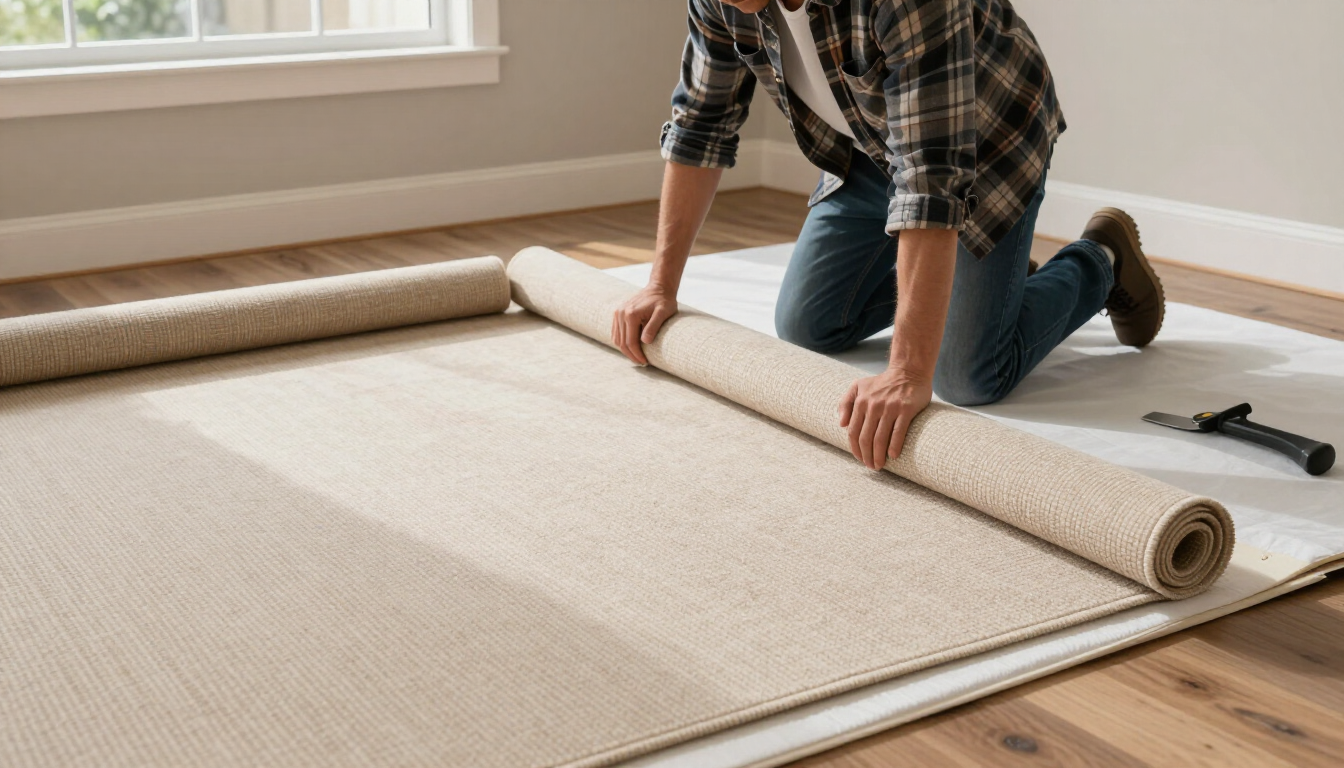
Rarely the right call. Carpet holds moisture, collects lint, and is one of the hardest surfaces in a house to dry after a hose failure. The
U.S. EPA treats moisture control as the starting point for mold prevention, and wet carpet that stays damp is exactly the condition that guidance warns about. Carpet belongs in the rooms where it earns its keep. See
types of carpet for those spaces. In a laundry room, a hard surface with a washable runner is the more practical comfort compromise.
Laundry room options at a glance