
Sunroom Flooring: What Survives Heat, UV, and Temperature Swings
Step into your sunroom barefoot on a July afternoon along the Wasatch Front and you already know the problem: the floor near the glass is hot enough to make you move quickly, while the spot by the doorwall stays comfortable. Come back in January and that same sunny zone is fine, but the area near the doorwall is cold enough that socks feel mandatory. Behind-glass heat, strong UV exposure at altitude, and wide day-to-night and season-to-season temperature swings make a sunroom the single most abusive "living room" in your house for flooring.
The sunroom flooring that survives this cycle is usually a product chosen against the room's real temperature swing, sun load, and slab or subfloor, not a living-room leftover moved outdoors-adjacent by default. For many conditioned four-season rooms, a waterproof-core rigid LVP or sheet vinyl is a strong candidate once the exact product's install and warranty range fits. Unconditioned three-season rooms are a narrower case: only products whose manufacturer temperature and install rules approve that exposure belong there.
The short answer: start with moisture-tolerant options, then check the specific product's temperature limits, light-exposure guidance, and warranty. Waterproof rigid-core LVP (WPC and SPC cores) and sheet vinyl often lead in conditioned rooms; laminate needs more caution around moisture and sun; carpet is usually the wrong tool for glass-heavy spaces.
Why Sunrooms Stress Flooring Differently Than Any Other Room
A sunroom is not a normal room with extra windows. It behaves like a greenhouse. Concentrated solar gain through glass can push floor surface temperatures well above the room's air temperature on clear afternoons, then drop fast after sunset. Combine that with altitude UV and cold winters, and your floor cycles through heat, UV exposure, and thermal expansion over and over, year after year.
Three stressors do the damage:
- Heat buildup behind glass. Surface temperatures near glazing can feel hot to your hand. Adhesives, vinyl, and underlayments all respond to sustained heat, and not always favorably.
- UV exposure. Direct sunlight fades some materials faster indoors than those same products ever see in shaded rooms. Fading is irreversible once it happens, so product selection matters far more than cleaning after the fact.
- Temperature swings. Sunrooms can go from warm at midday to near-outdoor cold at night in shoulder seasons. Materials expand and contract, and rigid products need room to move.
It also matters what kind of sunroom you have. A three-season room with no dedicated heating or cooling experiences near-outdoor temperatures and should be treated more like a covered outdoor environment when you pick a floor. A conditioned four-season room widens your options considerably, but it still carries the heat and UV load.
In practice, the failures we get called about in sunrooms are consistent: cupped planks, separated seams, faded patches in the exact shape of the window light, and lifting sheet vinyl edges near glazing. Almost all of them trace back to product choice or prep, not bad luck.
What You Actually Need From Sunroom Flooring (Selection Filters)
Before comparing products, run any floor you are considering through this checklist:
- Moisture tolerance. Will the core tolerate tracked-in snowmelt, condensation on glass, or a door left open during a rain?
- UV stability. Is the wear layer and color layer stable enough for hours of direct sun, or will the light path fade differently than the shaded areas of the same floor?
- Heat and thermal movement. How does the product behave at the surface on a hot afternoon, and how does it move across the room as temperatures swing?
- What is underneath. Concrete slab, wood subfloor, or an existing floor over an unconditioned space? Cold-floor feel matters in a room you use barefoot.
- How you use the room. Reading room, plant room with spills and humidity, kids and pets, or a three-season space that freezes?
- Winter comfort. A hard floor over a cold slab in January changes how much you actually use the room.
If your answers lean toward moisture, plants, and a three-season setup, pay close attention to the cautions on laminate and carpet below.
Sunroom Flooring Options Compared: What Holds Up Behind Glass
Here is the glanceable version, then the details. We do not quote prices here because your floor is priced after measurement, and we do not quote UV ratings or temperature tolerances because those belong to manufacturer documentation for the specific product you choose.
| Product family | Moisture behavior | UV and heat behavior | Underfoot feel | Best-fit sunroom | Main caution |
|---|---|---|---|---|---|
| Waterproof rigid-core LVP (WPC/SPC) | Core is typically waterproof to surface spills; overall floor performance still depends on product and install | Varies by product; many floating LVP lines expand/contract with heat and can fade in long direct sun | Warm and quiet (WPC) or dense and firm (SPC) | Conditioned four-season rooms when the exact product's install and warranty range fits; three-season/unconditioned only if that product explicitly allows the expected temperature swing | Never assume category approval; confirm temperature limits and expansion rules before install |
| Sheet vinyl | Moisture-tolerant with few seams when installed to product rules | Varies widely by construction and finish; thicker wear layers improve abrasion resistance but do not by themselves prove UV/fade performance | Soft and quiet | Budget-conscious conditioned four-season rooms when adhesives and heat limits check out | Adhesive and edge behavior under sustained heat; ask for product light-exposure guidance |
| Laminate | Wood-based (HDF/fiberboard) cores can swell when moisture enters joints or the core | Can fade or stress at seams in bright hot rooms unless the specific product's care/warranty and window-shade plan say otherwise | Firm, wood-like | Well-conditioned four-season rooms with moderate sun and manufacturer humidity/temperature compliance | Swelling and cupping are often not reversible; not a default three-season choice |
| Tile and stone (not an RFS product) | Highly moisture-tolerant | Generally handles heat and UV better than resin/wood-based floors, but still a tile-contractor scope | Hard, cold in winter | Any sunroom if you accept cold underfoot and hire tile work separately | Cold over a slab in winter; not sold or installed by RFS |
| Carpet | Fiber can hold tracked-in moisture | Many carpets can fade or discolor under prolonged direct sun; solution-dyed constructions often fare better but are still product-specific | Warmest option | Fully conditioned, shaded sitting rooms only when fading risk is accepted | Moisture retention near doorwalls; usually a poor fit for glass-heavy or three-season rooms |
Waterproof Rigid-Core LVP (WPC and SPC Cores)
In many conditioned four-season sunrooms behind large glass, rigid-core LVP is a strong candidate when the exact product's install guide and warranty allow the room's temperature range. A waterproof core typically handles snowmelt, spills, plant-watering mishaps, and condensation better than wood-based cores. To be clear about the language: the core itself is often described as waterproof, but overall floor performance still depends on the specific product and how it is installed. Standing water at seams and edges over long periods is a different situation than a wiped-up spill.
WPC and SPC cores differ in feel more than in automatic sunroom fitness. WPC (wood-plastic composite) tends to feel slightly softer and quieter underfoot. SPC (stone-plastic composite) is denser and more rigid, which can help over less-than-perfect subfloors. Some manufacturer guides allow certain floating LVP lines in fully enclosed three-season rooms within stated temperature bands (often with larger expansion gaps when heat runs high), while other rigid-core lines require continuous HVAC-range conditions. Neither core type is automatically "the sunroom one." Confirm the product's written temperature limits and three-season language before you buy.
Two cautions matter here. First, UV: vinyl products vary by construction and finish. Strong direct sun can still cause fading or surface change over time, and a thicker wear layer mainly addresses abrasion, not a guarantee of fade resistance. Ask about the specific product's light-exposure or fade guidance, and consider window film or treatments for the harshest exposures. Second, thermal movement: floating rigid-core floors expand and contract with temperature, so professional installation with correct perimeter clearance and transitions matters more in a sunroom than almost anywhere else in the house. Transition placement near doorwalls is a common failure point when the room swings temperature. Do not treat most LVP as approved for an unconditioned three-season room unless that product's install and warranty documents say so.
You can read more about LVP and laminate flooring on the product page.
Sheet Vinyl
Sheet vinyl is the practical, budget-aware alternative, and it has one genuine structural advantage in a sunroom: few or no seams. In a room where seam separation and edge lifting near heat are common failure modes, a continuous surface starts with an advantage. It is moisture-tolerant, easy to clean after plants and pets, and works well over sound subfloors with the right adhesive.
The cautions are heat and UV sensitivity, which vary by product. Some sheet vinyls have shown fading or embrittlement in direct-sun rooms; others hold up better when the finish system and adhesive are matched to the exposure. A thicker wear layer improves abrasion resistance, but it does not by itself prove UV or fade performance. Ask for the product's light-exposure guidance and confirm adhesive temperature limits. Adhesive and edge behavior under sustained heat make surface prep part of the job. Our sheet vinyl page covers the product in more depth.
Laminate Flooring: Know the Limits Before You Choose It
Laminate typically uses a wood-based fiberboard (HDF) core, which puts it at higher moisture risk in a sunroom than waterproof-core vinyl. To be fair to it: some laminates can work in a well-conditioned four-season room with moderate sun exposure when humidity and temperature stay inside the manufacturer's range. In a hotter, wetter, or swing-heavier situation, the failure mode is unforgiving. Moisture that enters joints can swell the core. Sunroom humidity from plants, snowmelt, or a door left open during weather, plus heat and UV, raise that risk. Seams can swell, edges can cup, and that damage is often not reversible.
UV is the other issue. Laminate light-fastness varies by product; some warranties address fade and others emphasize limiting direct sun with window treatments. Light-path fading across a plank floor is very visible because the plank pattern makes the boundary obvious.
If you love the laminate look, a rigid-core LVP in a similar visual is often the safer conversation for a glass-heavy room, again subject to the exact product's install and warranty limits.
Tile and Stone
Briefly, because tile is outside RFS's product line: porcelain or stone tile is a common sunroom comparison option installed by tile contractors, not by us. It generally handles heat, UV, and moisture better than resin or wood-based floors, with the tradeoff of cold underfoot in winter over a slab (radiant heat changes that conversation). We mention it for comparison only, not as an RFS service.
Carpet in a Sunroom: Usually the Wrong Tool
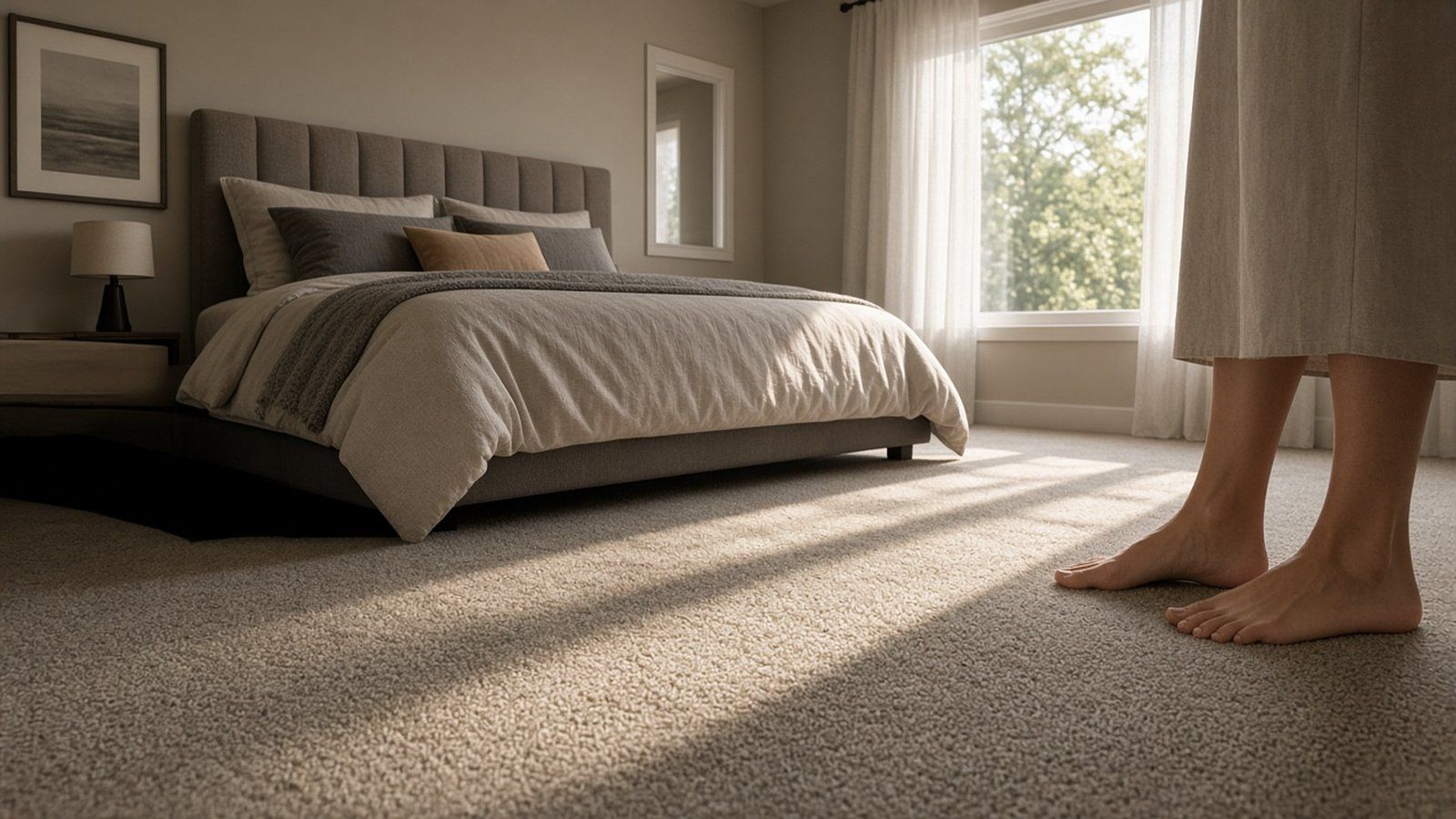
Carpet in a room with intense sun can fade or discolor, and fiber can hold tracked-in moisture from snow and rain near doorwalls. In a humid, plant-heavy three-season room, carpet also holds moisture against the subfloor, which raises mold and mildew concerns; the EPA's guidance on moisture and mold in homes is blunt about the general principle that persistent dampness on or under flooring creates problems. There are exceptions: a fully conditioned, shaded four-season room used as a sitting room can carry carpet if you accept fade risk, and lower-pile or solution-dyed constructions often fare better than other builds, still on a product-by-product basis. Sunrooms off a pool door or right at an exterior entry are usually a poor carpet fit. If you want to talk through a rare legitimate case, our carpet installation page is the starting point.
Moisture, Subfloor Prep, and Why Your Sunroom Slab Changes the Answer
Many sunrooms sit on a concrete slab, sometimes a converted patio poured decades ago with no vapor barrier. That single fact changes product selection and prep more than anything else in the room. Moisture vapor moves through slab concrete over time, and it can affect adhesives, underlayments, and anything wood-based above it. A proper moisture assessment, and if needed mitigation or the right product choice for the conditions, is part of the job, not an optional extra.
If your sunroom sits on a wood subfloor, over a crawl space, or over unconditioned space, the checks are flatness, fastener condition, and any existing flooring layers. Cold floors in these rooms often trace to air gaps and missing insulation below, and fixing that before the flooring goes down changes comfort dramatically.
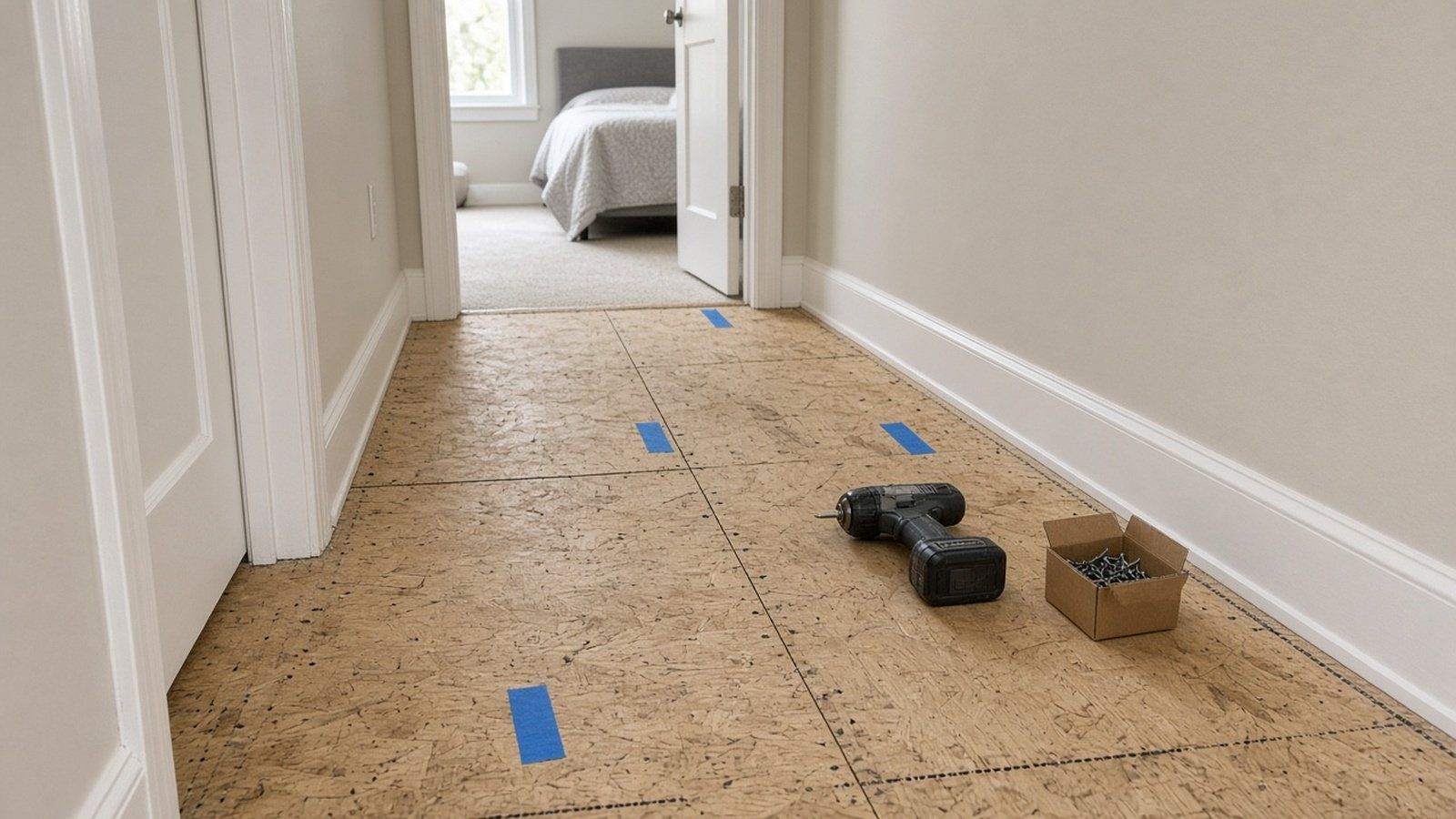
Going over an old floor, such as existing sheet vinyl or tile, is sometimes possible with rigid-core products if the manufacturer's flatness requirements are met. That is a specs-and-site-conditions question we verify during the in-home measure, not a guess. If the subfloor itself needs work first, our subfloor repair page explains what that involves. In a sunroom, prep is not overhead; it is the difference between a floor that survives the summers and one that does not.
What Installation in a Sunroom Looks Like
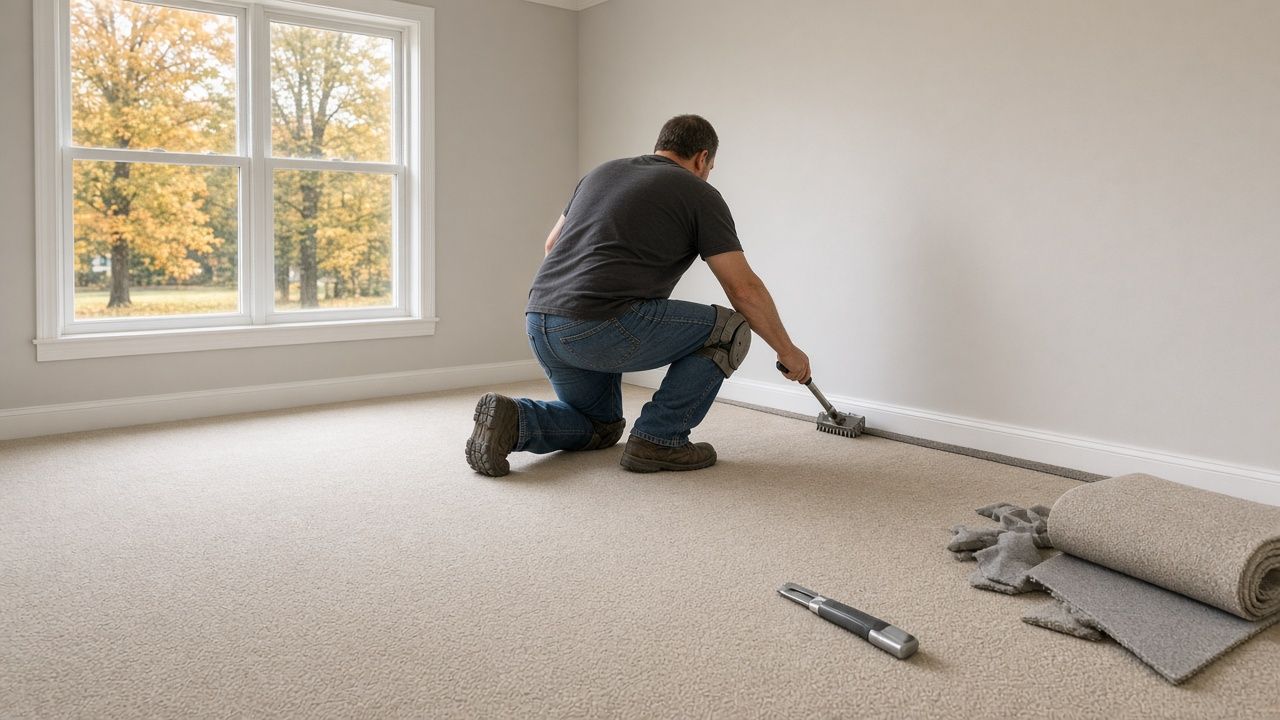
The process starts with the in-home estimate and measure, and room conditions matter here more than in typical rooms. We look at sun exposure, glazing, slab or subfloor condition, door thresholds (doorwall height and clearance are frequent constraints in sunrooms), and transitions to the rest of the house.
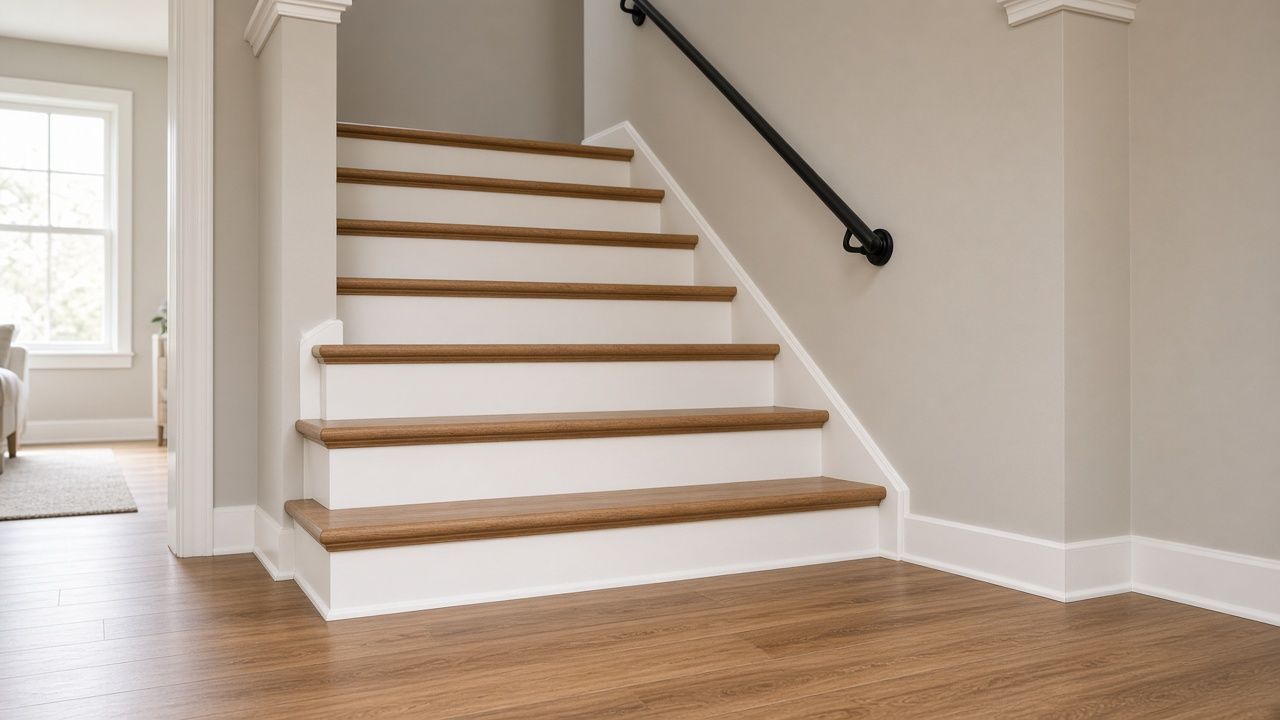
From there, manufacturer guidance governs the details: the room and the product should be at reasonable conditions at install, floating floors get the correct perimeter clearance and transition moldings at the doorwall and the house doorway, and stairs get their own installation approach and their own scheduling realities if your sunroom sits a step up or down. We will not promise expedited timelines for stairs or complex installs. Plan to clear the room of furniture and plants for installation day.
Common Sunroom Flooring Mistakes (And How You Avoid Them)
- Choosing laminate for a hot, bright, or three-season room. Fiberboard plus moisture plus heat often means swollen seams. Look instead at products whose written temperature and warranty rules match the room, which for many conditioned sunrooms is a rigid-core LVP conversation.
- Ignoring the slab moisture situation. New flooring over a wet slab fails the same way the old floor did, only more expensively.
- Skipping shade planning. If you do not plan window film or treatments, do not be surprised when a faded light path appears in the exact shape of the window.
- Pinching the expansion gap at the doorwall to make a threshold fit, then watching planks tent or buckle in August. The clearance is not negotiable.
- Installing over an unconditioned space without addressing the cold below it. Fix the insulation gap first; comfort follows.
- Using an entry-grade leftover in the harshest room in the house. Match the product's abrasion rating, light-exposure guidance, and temperature limits to the room; a thicker wear layer alone is not a UV warranty.
- Replacing a floor without asking why the last one failed. The answer to that question usually dictates the next product.
When a Different Room Guide Fits Better
If your actual problem is a different room, route accordingly. A mudroom or entry is about tracked snowmelt, salt, and grit (a separate guide when that cycle publishes), not UV and heat. For laundry splash and appliance risk, see laundry room flooring. For below-grade moisture, see best flooring for basements. For standing-water bath projects, see waterproof flooring for bathroom. And if your question is really about pets across the whole house, see best flooring for pets.
Your Sunroom Estimate Checklist: What to Have Ready
To make the in-home estimate productive, have this ready:
- Photos or notes on when the room gets sun and for how long, and which walls are glass
- Whether the room is three-season or conditioned (heated and cooled)
- Known issues: past flooring failures, moisture, door dragging at the doorwall, cold floor complaints
- How the room is used: plants, pets, kids, dining, hot tub adjacency
- Style direction and any saved visuals
- Questions to ask during the visit: the exact product's temperature and three-season/install warranty language, light-exposure guidance, slab or subfloor findings, transition and threshold approach, and what prep the room needs before flooring day
Pricing comes after measurement, which is exactly why the in-home estimate exists.
Get a Sunroom Floor That Handles Heat, UV, and Cold
Your sunroom is the toughest room in the house for flooring, and the combination of the right product and proper prep is what separates a floor that lasts from one that fails in a couple of summers. We are based in West Jordan and serve homeowners along the Wasatch Front, licensed and insured under Flooring Contractor License S220. Schedule your free in-home estimate through our contact page or by calling (801) 907-1908.
Recent Posts