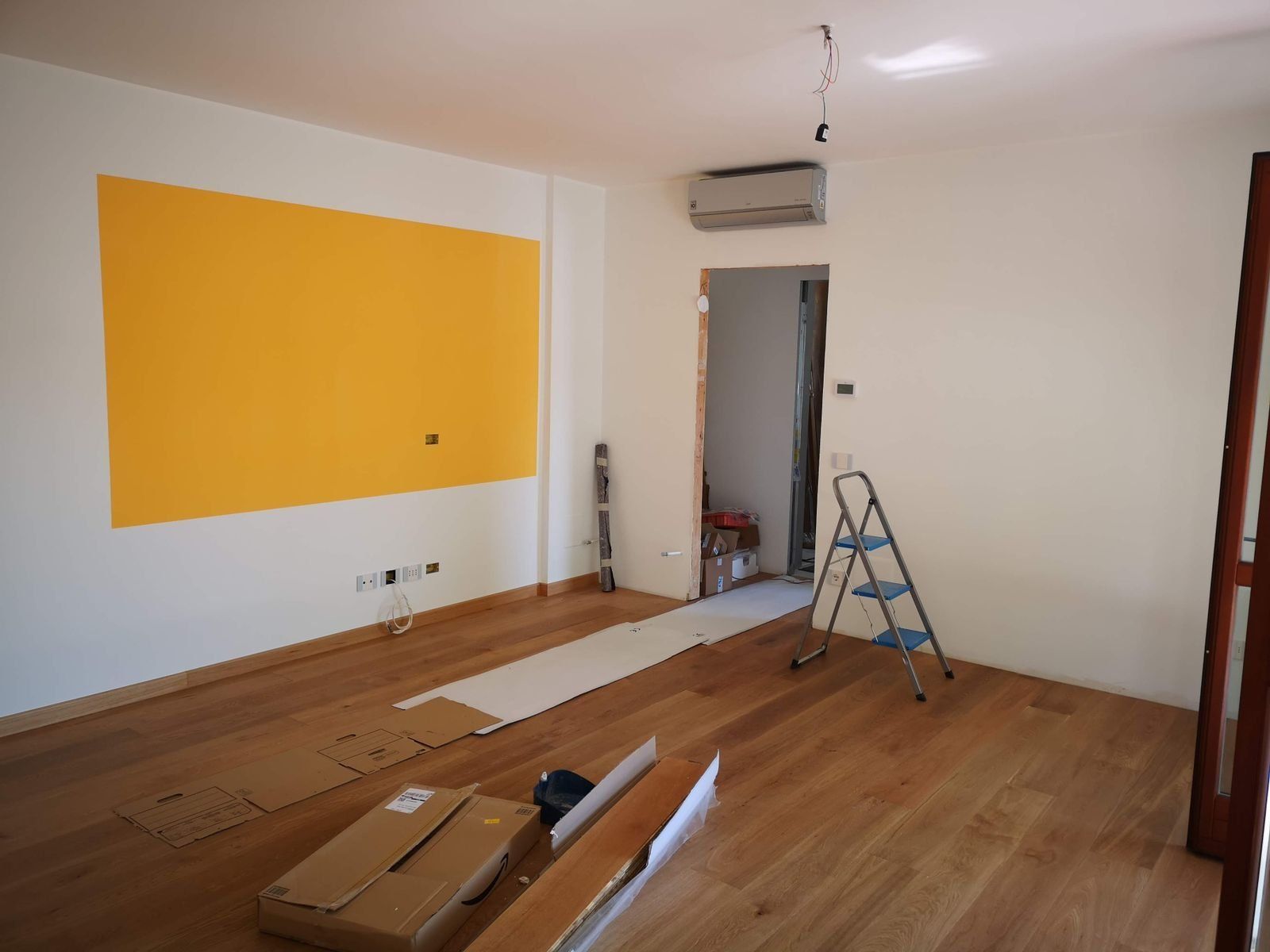
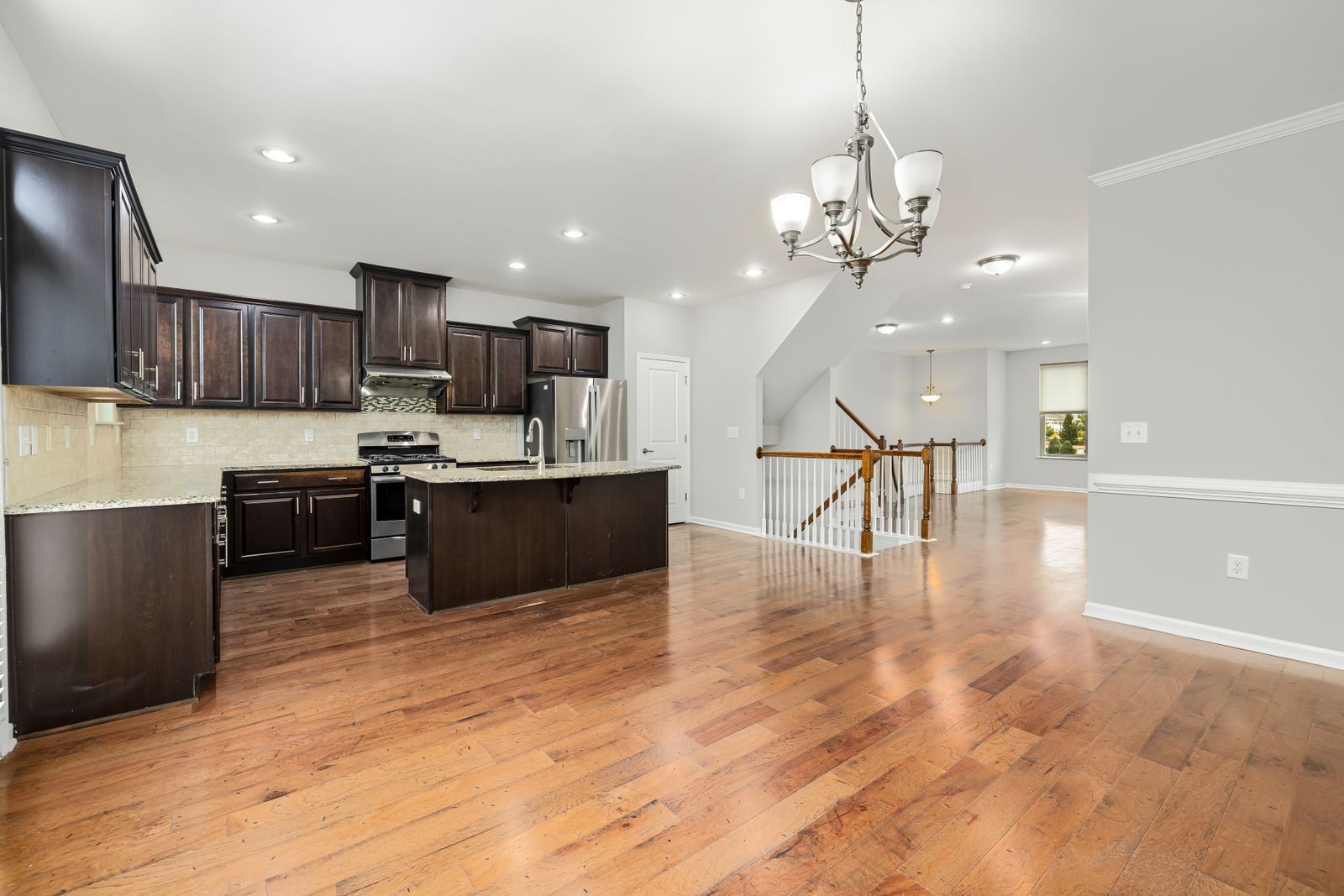
You notice it in October. You walk the hallway in sock feet on the way to the laundry room and feel the flattened path where everyone turns toward the stairs. You sit in the basement family room and realize the cold slab is winning through carpet that has gotten thin. Then you look at the calendar, count the weeks until Thanksgiving guests, and the question gets practical: how long does carpet installation take, and can it realistically be done before people start arriving with luggage and casserole dishes?
Here is the direct answer. The FAQ on our
carpet installation page says, "Most residential carpet installations are completed in a single day. Larger projects or multi-room installations may take two days." That is the baseline for the install day itself. The catch is that the install day is often the shortest part of the timeline. What homeowners misjudge is everything around it: the measurement, picking and receiving the product, old floor removal, possible subfloor work, and the ventilation window after the crew leaves. Plan for those pieces and you get a real calendar instead of a hopeful one.
The Short Answer: How Long Does It Take to Install Carpet
Start with that baseline: one day for most residential projects, possibly two for larger or multi-room jobs. As general guidance,
Angi's carpet installation timing guide puts a typical single-room install at about 1 to 2 hours of active work, and suggests multiplying that by the number of rooms. Angi also notes that bigger crews finish faster, so the same house can move at different speeds depending on how many hands are on it.
It helps to separate three clocks that tend to get blended into one question:
- The active install hours. The time spent cutting, stretching, and fastening carpet in a room.
- The full project day. Arrival, setup, furniture moving, removal of old flooring, the install itself, and cleanup.
- The calendar timeline. From your first phone call to the day the room is fully back in use.
The third clock decides whether your floors are ready before the doorbell rings. It is also the easiest to underestimate. Laying carpet is fairly predictable work. The variables that stretch a schedule usually show up after the old floor comes up: a dip in the subfloor, adhesive left from a previous floor, a slab that needs attention. Nobody can promise you those surprises, but you can leave a little room for them. When the crew finishes, ask your installer when the room is ready for furniture and normal use for your specific product rather than assuming a standard answer.
Room-by-Room Carpet Installation Time Estimates
Wondering how long it takes to carpet a room? The estimates below pull together general carpet installation time guidance from Angi and the Carpet and Rug Institute, plus the timing answer from our FAQ. Treat them as planning figures, not a schedule for your house. Actual time depends on room size, layout, the product you choose, and what is found under the old floor.
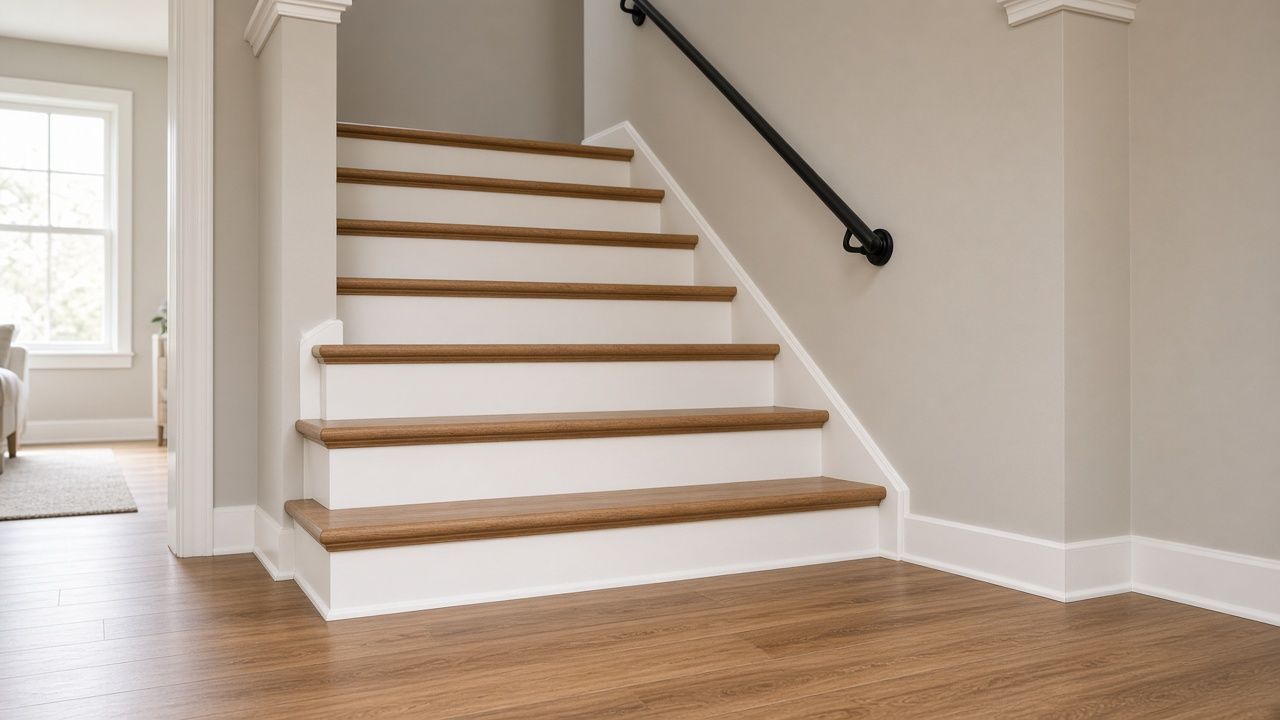
Stairs. Each step is its own small precision job, with stretching, wrapping, and fastening on every tread and riser. A straight flight moves at a steady pace. A run with landings or a pie-shaped turn takes longer because more pieces are custom cut. If stairs are part of your project, product choice matters as much as timing, and our guide to
carpet for stairs in Utah homes covers what holds up on steps.
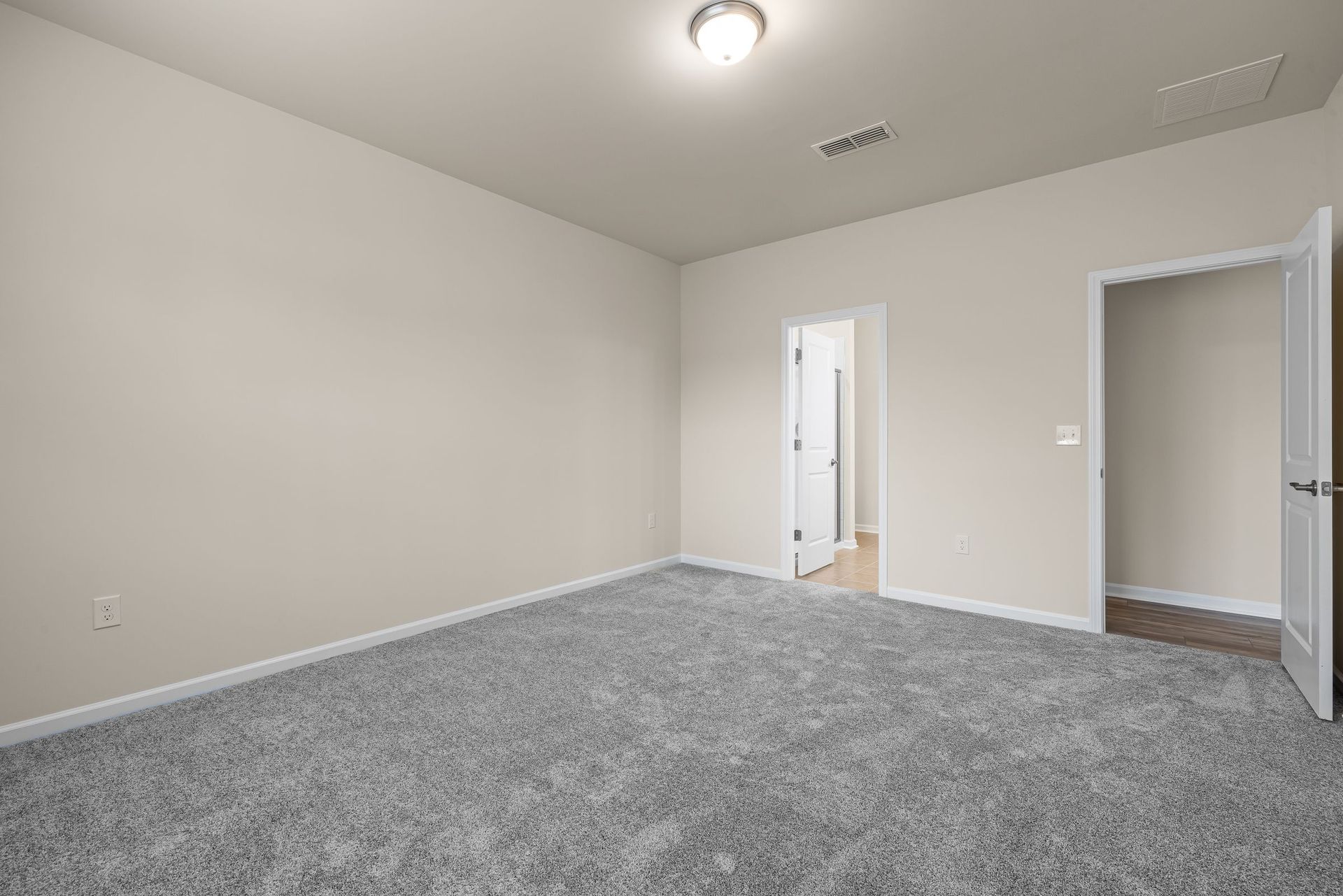
Layouts and products. Angi's general guidance notes that oddly shaped rooms and higher pile carpet take longer. Diagonal walls, nooks, closets, and columns all mean more trimming of pad and carpet. That extra time is a quality trade-off, not a flaw. It is the difference between a seam you never notice and one you see every morning.
Furniture. Our carpet installation FAQ says, "We can assist with moving standard furniture as part of the installation process. Heavy items like pianos or large entertainment centers may need to be moved prior to our arrival." Rooms that are already cleared move faster on install day, so emptying closets, shelves, and small items ahead of time is the easiest speed-up available to you.
What Adds Time to a Carpet Installation
Old Flooring and Carpet Removal
How long does it take to lay carpet when old flooring has to come out first? Longer than most people guess. Angi's general guidance puts old carpet removal at about 1 to 2 hours, and Angi notes carpet is the quickest flooring to pull up.
Tile underneath is the big one. Angi puts tile removal at 8 to 12 hours per 100 square feet. If your project involves stripping an old tile floor, removal becomes its own workday rather than an add-on to the install day. It can feel slower than the install itself, and that is normal. Getting down to a clean, sound subfloor is what lets new carpet stay tight.
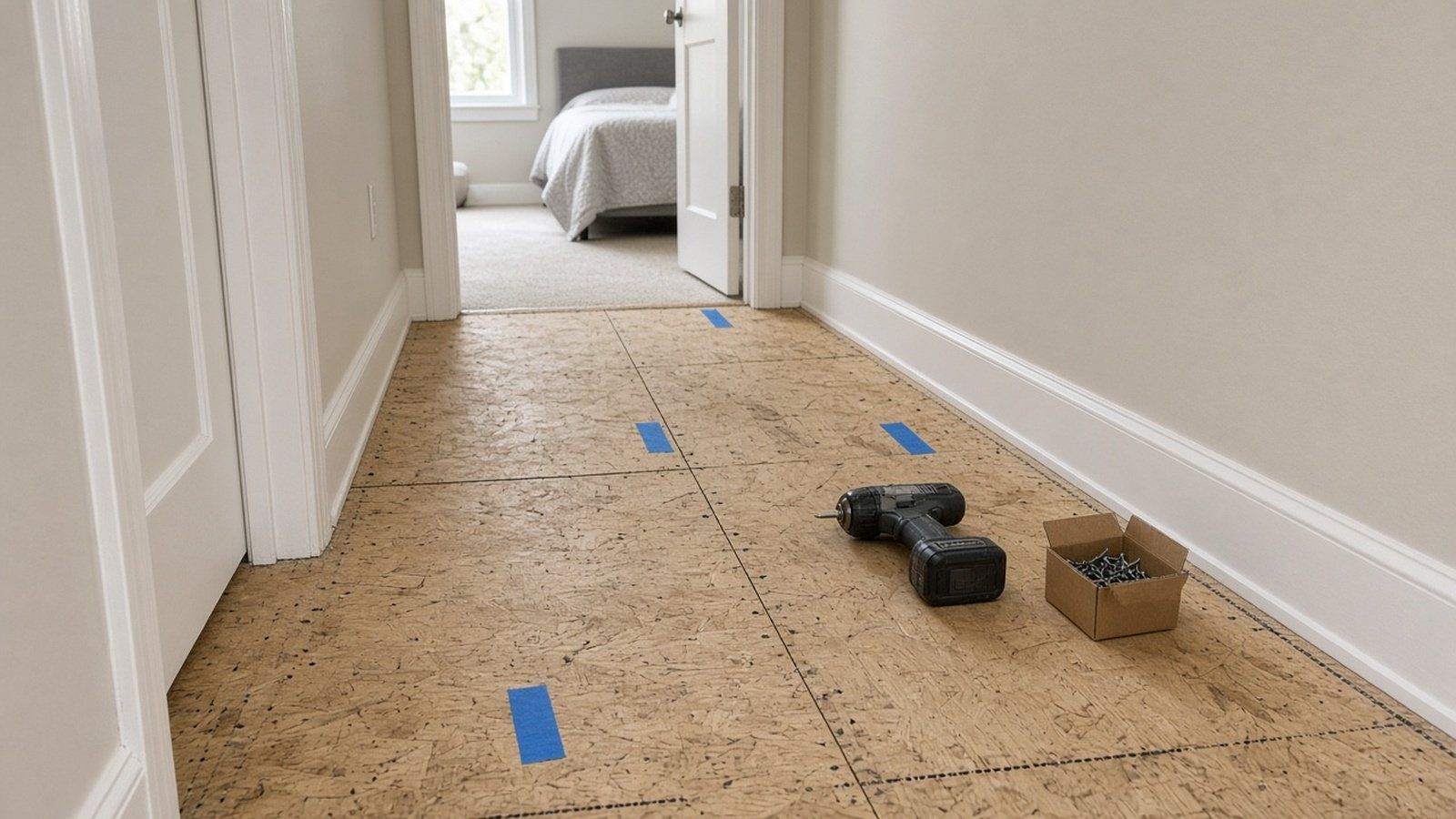
Subfloor Repair and Leveling
Angi's general guidance says leveling dips in a subfloor can take 1 to 3 days. Not every installation needs this work. It is usually discovered rather than assumed, and the free in-home measurement and estimate is where it tends to surface. If you already suspect dips, soft spots, or squeaks, our
subfloor repair page explains what that service covers. A floor issue found after the old carpet comes up is far less stressful when your schedule can absorb a day or two than when guests land the next morning.
Room Layout, Seams, and Product Choice
This is where the timing question meets the buying decision. A plush, high pile carpet in a wide great room with several angles is a bigger labor job than a low, uniform carpet in a square bedroom. None of that argues against those products. It just means the honest answer to "how long will my project take" depends partly on what you buy, not only on how many rooms you have.
The Full Timeline: From Measurement to Walking On It
For holiday planners, how long to install carpet is really a calendar question. The arc usually looks like this:
- Free in-home measurement and estimate. The starting point. The sooner it happens, the more of the season you keep in front of you.
- Product selection. Choosing the carpet and pad.
- Product arrival and scheduling. Ask when your carpet will be on hand and what install date that supports.
- Install day or days. A single day for most residential installs, two for larger or multi-room projects.
- Post-install ventilation. The quiet part of the timeline nobody budgets for.
Next-day installation available on select jobs can help when timing is tight. Keep expectations realistic, though: stairs, multi-room projects, and jobs that need product ordered or prep work done usually need more lead time.
If you want the play-by-play of the install day itself, our guide on
what to expect during flooring installation in Utah covers the process and home preparation, so this article can stay focused on the calendar.
Ventilation After Installation: The 48 to 72 Hour Window
The
Carpet and Rug Institute recommends good ventilation and air exchange for about 48 to 72 hours after new carpet goes in. In practice, that means keeping fresh air moving through the house for two to three days while the new carpet smell dissipates.
This is exactly why buffer days matter before Thanksgiving. An install finished several days before guests arrive has had its ventilation window. One finished the night before has not.
Temperature and Humidity Conditions
The
CRI 105 residential installation standard calls for the HVAC system to be running, indoor temperatures between 65 and 95 degrees F, and relative humidity no higher than 65 percent for 48 hours before, during, and 72 hours after installation. In plain English, the rooms getting carpet need to be comfortably warm and normally dry for the days around the install.
That matters once Utah nights turn cold. A basement or spare room that sits unheated all week and warms up only on install morning is starting behind. Keep the heat on in the rooms getting carpet in the days before and after the crew arrives.
Planning Your Carpet Installation Before the Holidays
Work backward from the day your guests arrive. Subtract the 48 to 72 hour ventilation window, then the install day or days, then a possible removal or subfloor day if tile is coming out or you suspect floor problems, and you will see how quickly the calendar fills in behind you. At the free in-home estimate, ask for a realistic install date based on your rooms, your stairs, and the products you are considering, then protect a few buffer days on both sides of it.
A few decisions to settle early:
- Whole house or just guest areas? If the timeline tightens, start with the rooms guests will actually use: the guest bedroom, the main living area, and the stairs.
- Staying home during the install? Ask about it at the estimate so the work can be sequenced around the rooms you need. The companion guide linked above covers day-of expectations.
- What if a subfloor issue turns up? That is precisely what your buffer days are for.
Book the measurement early. Everything else on the calendar follows from it.
Get Your Carpet Timeline Started
Most residential carpet installations finish in a single day and larger projects in two, but the days around the install are what decide whether your floors are ready before guests arrive. Instead of planning against generic numbers, get a timeline built for your rooms, stairs, and subfloor. Schedule your free in-home measurement and estimate through our
contact page or call (801) 907-1908. We work from West Jordan across Salt Lake and Utah counties.