
Mudroom Flooring: What Holds Up Against Salt, Grit, and Wet Boots
It's the first snow of the season, and you're pulling off wet boots in the entry while rock salt from the driveway crunches under your heels. A gritty film is spreading from the mudroom toward the kitchen, the doormat soaked through days ago, and the floor underneath is starting to show exactly what a Wasatch Front winter does to a surface that was never built for it. So what actually holds up? The best mudroom flooring is a moisture-tolerant, easy-clean surface, typically sheet vinyl or a waterproof rigid-core LVP, installed over a properly prepped subfloor. The mudroom is the hardest-working small room in the house, taking snowmelt, ice melt, sand, pet paws, and boot traffic that would wreck a living-room product in a season or two. The decisions that matter most come down to product choice, moisture and subfloor prep, transitions to adjacent rooms, and what to have ready for the measurement visit.
Why Mudroom Flooring Is a Different Decision Than Other Rooms
A hallway sees dry foot traffic. A mudroom sees liquid plus grit plus chemistry, all at once, every single day from November through March.
Here's the stress stack your mudroom floor has to survive:
- Standing water from snowmelt that pools at the door threshold and under boot trays
- Dissolved road salt and ice melt that gets tracked in as a brine and dries into a residue
- Abrasive grit that acts like sandpaper on wear layers, especially when it's ground in under boot heels
- Repeated wet/dry cycles that stress seams, edges, and transitions
- Pet traffic, because muddy paws land here first, before any other room in the house
The other thing to understand is that failure in a mudroom is rarely gradual. A living room floor fades slowly. A mudroom floor fails at a specific point: a seam that opened, an edge that wicked water, a transition strip that funneled snowmelt into the subfloor. Grit accelerates the surface wear, but liquid finds the weak points.
From an installer's perspective, most mudroom flooring callbacks trace back to one of two things: product choice, meaning a surface that was never rated for standing moisture, or skipped prep, meaning flatness, moisture, or transition issues that were never addressed before install day. Both are preventable, and both come down to decisions made before the floor goes down.
One question we hear often: "Can I just run the same flooring from the kitchen into the mudroom?" Sometimes, yes, and it looks great. But the mudroom is often the first place that choice fails, because the kitchen floor never has to handle a puddle of snowmelt sitting on it for an hour while everyone comes in from the car.
Top Flooring Options for a Mudroom
Sheet Vinyl: The Workhorse for Wet Entries
If your mudroom sits between the garage and the kitchen and takes the full brunt of boot season, sheet vinyl is the leading contender, and it comes down to one word: seams.
In a small room, sheet vinyl can often be installed with minimal or no seams, which means very few entry points for water at the surface. That's a structural advantage no plank product can match in the wettest corner of your home. Modern sheet vinyl also offers a resilient surface with good grit resistance, comfortable underfoot feel for a room where you're standing to pull boots off, and an easy sweep-and-mop routine after boots and pets have done their worst.
Installation realities matter here. Where seams are unavoidable, proper seaming technique determines whether that seam is a weak point or a non-issue, and full-spread versus perimeter-secure approaches vary by product and substrate. A professional measurement matters in a room with doorways, closets, and boot benches, because layout planning decides where seams land before the first cut is made.
Two cautions: surface durability varies by product line, so verify wear-layer details on the specific products you're considering during selection. And dragging heavy boot trays or letting sharp pet nails go untrimmed can scuff lower-grade finishes. The product category is right for the room; the specific product still needs to earn its place.
Waterproof Rigid-Core LVP (WPC/SPC): Style That Handles Snowmelt
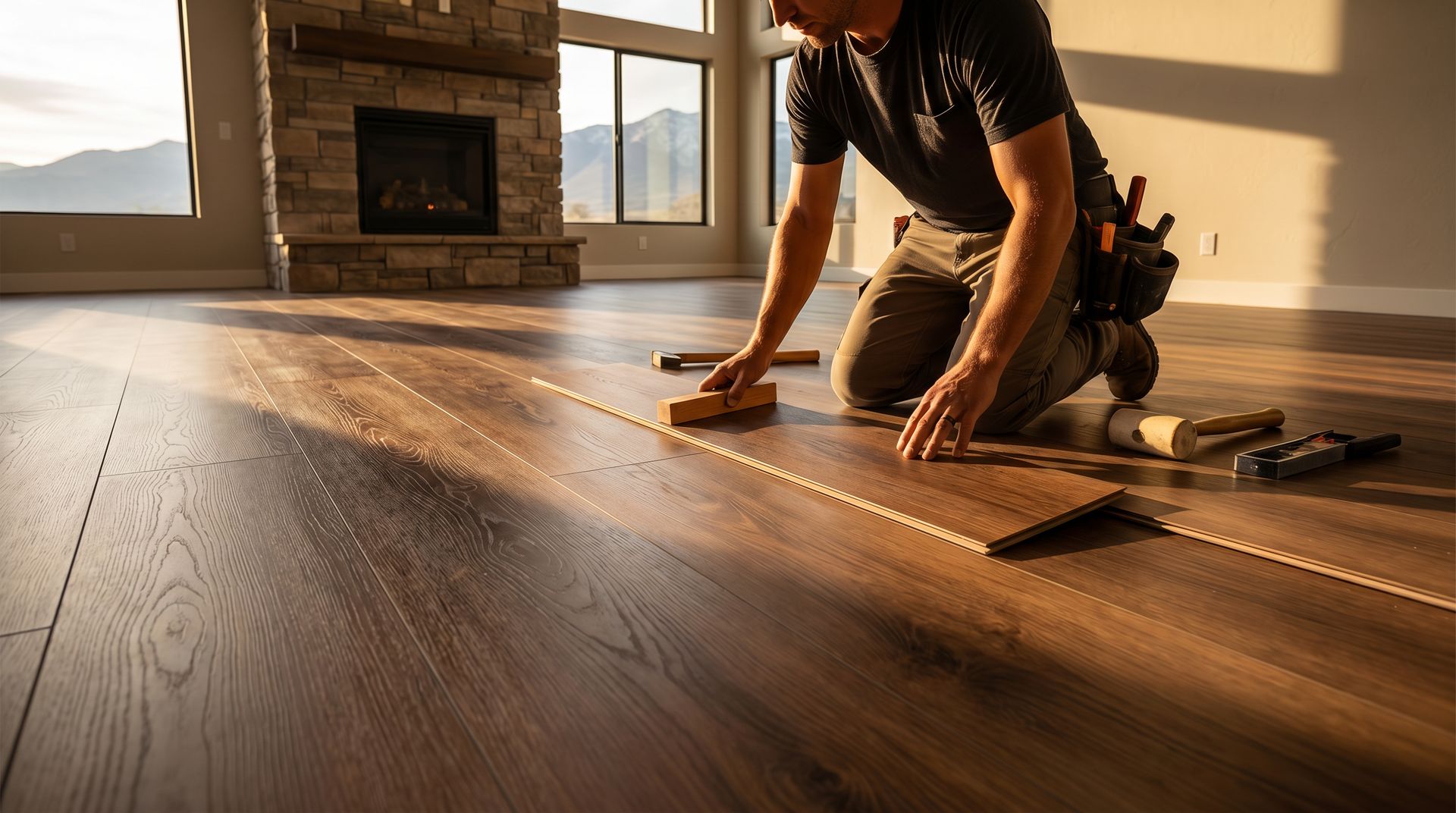
The other top mudroom contender is rigid-core luxury vinyl plank, and it's the choice most homeowners gravitate toward when they want wood-look styling that flows with adjacent rooms.
The advantage starts with the waterproof core construction. Water sitting on the surface of a rigid-core plank isn't going to swell the plank the way it swells a fiberboard product. Rigid cores also handle minor subfloor unevenness better than flexible products, which matters in older homes with uneven substrates.
But here's the honest installer's note: the core resists water, while the click-together seams and edges are still the vulnerable zone in a true standing-water scenario. Snowmelt pooling at a threshold can work its way between planks over time. That's why sheet vinyl still wins the "wettest corner" argument, and why plank layout and transition planning matter so much in a mudroom install.
On wear layers, keep it general: thicker wear layers generally resist grit and pet nails better than thinner ones. Confirm specific product specs during selection rather than shopping on category alone. As for WPC versus SPC, both are rigid waterproof-core constructions; differences in density, underfoot feel, and subfloor tolerance are product-specific and worth discussing during your estimate.
Laminate: Where It Works and Where It Doesn't
Here's where honesty matters, because plenty of homeowners fall in love with a laminate look before thinking about the room it's going into.
Traditional laminate has a fiberboard core, and fiberboard swells when exposed to standing water. In a mudroom with regular snowmelt, that's a real risk, and it's why most laminate is a risky default for this room. Some laminate products carry moisture-resistant ratings, but performance depends heavily on the specific product and the install conditions, so don't overstate what a label means.
The best-fit scenario for laminate is a mudroom that functions more as a transitional hallway: a covered entry, minimal liquid exposure, and a strict mats-and-boot-tray routine you'll actually maintain. If your mudroom is really a second back hall with an awning over the door, laminate can work. If it's the garage entry where snowy boots come off, it's the wrong product for the room.
Carpet: Generally the Wrong Room, With One Caveat
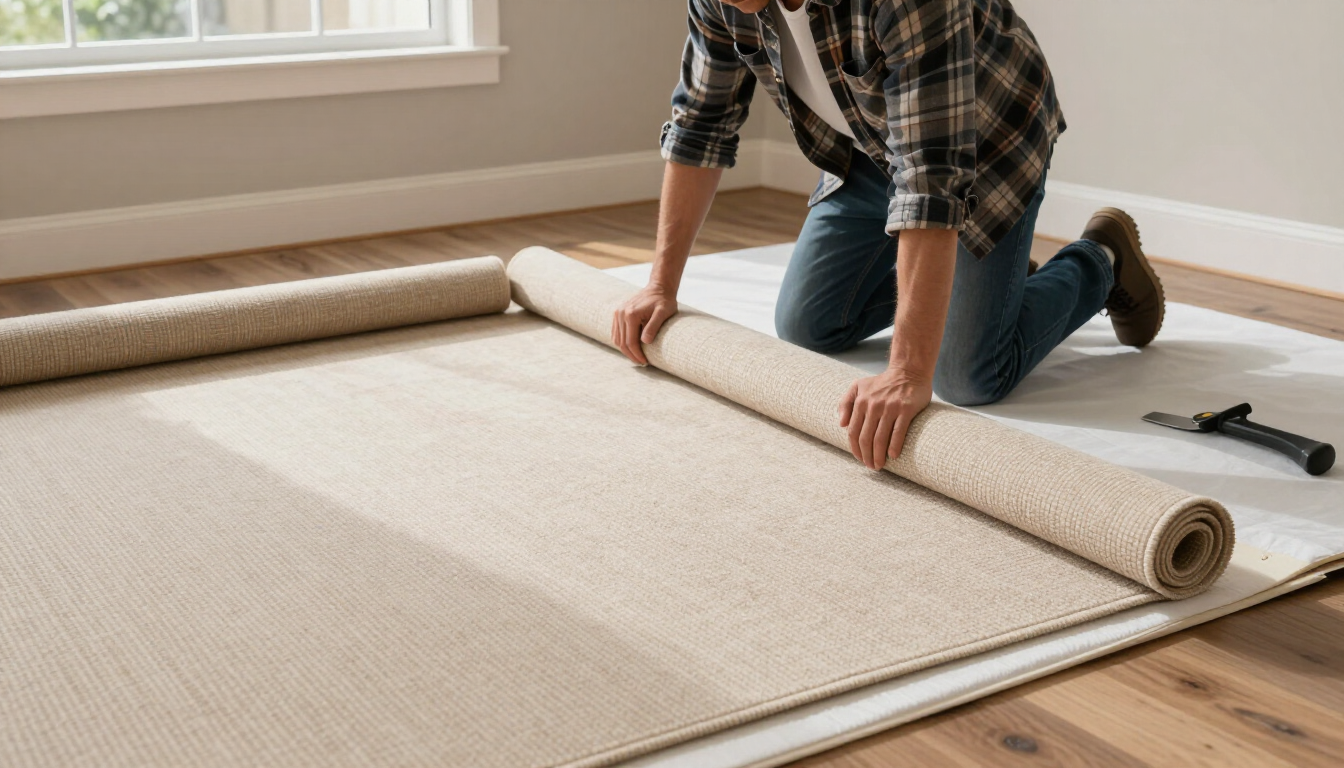
From an installer's perspective, carpet in the direct boot zone traps salt, moisture, and grit against the fibers and padding, and it's one of the hardest surfaces to keep hygienic in this room. The Carpet and Rug Institute's care guidance (carpet-rug.org) covers how much routine effort clean carpet actually takes, and a mudroom multiplies that.
The one caveat: some homeowners want carpet in a small adjoining seating or bench nook just outside the wet zone. That's a layout-specific decision we're happy to talk through during a carpet installation conversation, not a mudroom-flooring recommendation.
Quick Comparison: Sheet Vinyl vs Waterproof LVP vs Laminate for a Mudroom
| Attribute | Sheet Vinyl | Waterproof Rigid-Core LVP | Laminate |
|---|---|---|---|
| Moisture tolerance | Best; minimal or no seams means few water entry points | Very good; waterproof core with seam and edge considerations | Risky; fiberboard core can swell with standing water |
| Grit and wear resistance | Good; varies by product line | Good to excellent; wear layer dependent | Moderate; surface can't handle wet grit cycles |
| Pet-friendliness | Good; easy accident cleanup | Very good; scratch resistance varies by wear layer | Moderate |
| Style options | Strong; wood, tile, and stone looks | Excellent; widest wood-look range | Excellent wood looks |
| Cleaning routine | Simplest; sweep and mop | Simple; sweep and damp mop | Sweep only in wet scenarios |
| Subfloor sensitivity | High; sheet goods telegraph flaws | Moderate; rigid core tolerates minor deviation | Moderate; still needs a flat, dry substrate |
The one-line takeaway: sheet vinyl for the wettest entries, waterproof rigid-core LVP for style continuity with real moisture performance, and laminate only in dry transitional layouts.
Mudroom-Specific Selection Filters
Before you settle on a product, run your household through these filters:
Traffic and household type. Active families with kids dropping soaked backpacks and dogs shaking off snow should weight surface durability and cleanability heavily. A two-person household with a covered porch has more flexibility.
Pets. Muddy paws land in the mudroom first, before anywhere else in the house. Nail resistance, accident cleanup, and a surface you can mop matter more here than in almost any other room.
Salt and ice melt chemistry. Tracked-in de-icing residue is both abrasive and residue-leaving. Some finishes show a hazy film if salt brine is left to dry and grind in. A rinse-and-mop routine after heavy salt days protects any floor you choose.
Grit management. An entry mat system, a scraper mat outside and an absorbent mat inside, extends the life of any floor. Flooring choice and mat strategy work together; neither should carry the whole burden alone.
Transitions to adjacent rooms. Height differences between a new rigid-core plank and existing kitchen flooring, reducer strips, and threshold details are where mudroom installs either look finished or look improvised. A pro measurement catches these before install day, not during it.
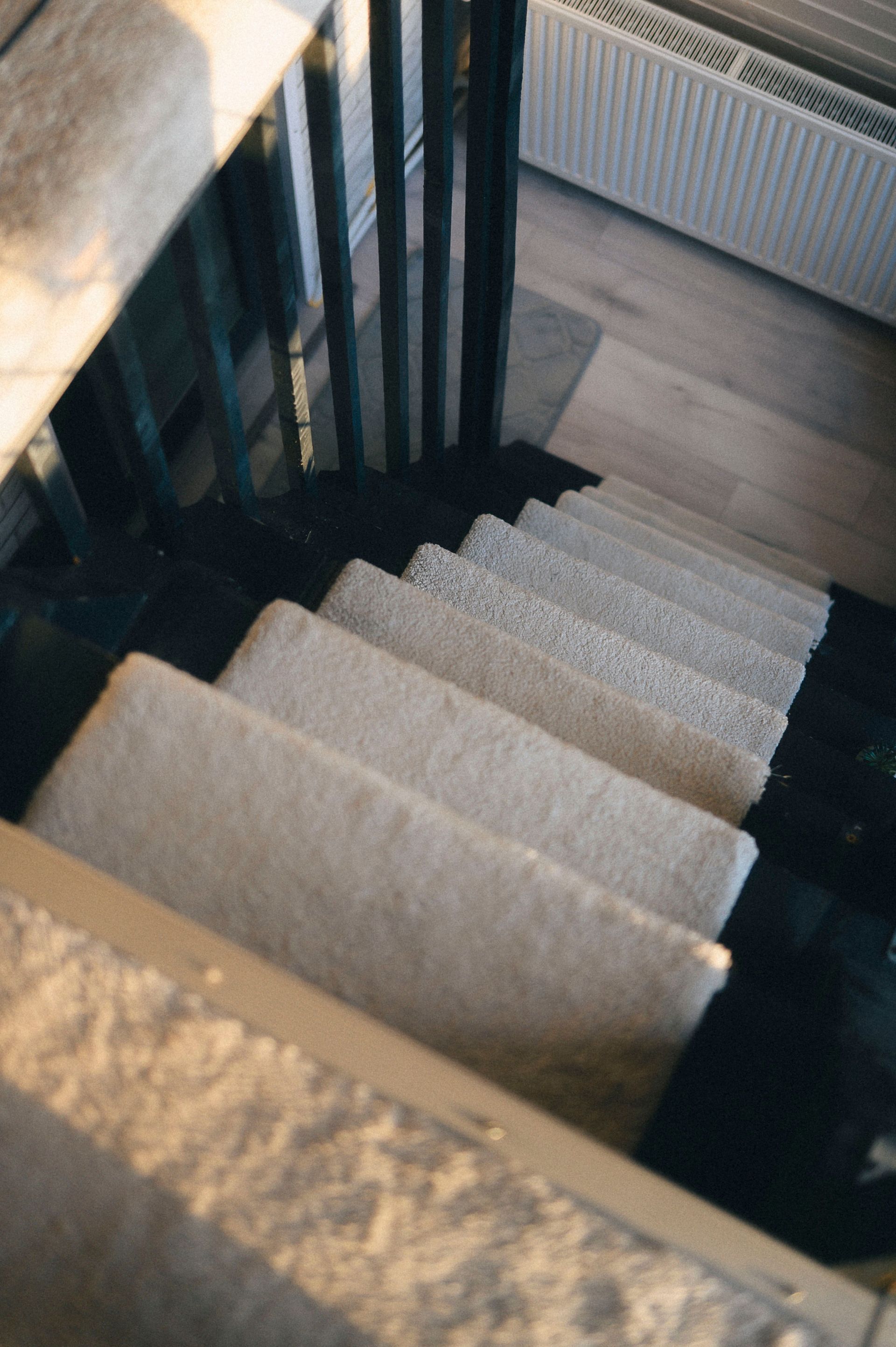
Stairs from the mudroom. Many homes have basement or garage-entry stairs off the mudroom. Stairs require different product and install considerations than flat floors (the stairs guide linked near the end of this article covers that project), and they should always be scoped through the estimate conversation rather than assumed.
Moisture, Subfloor Prep, and Underlayment
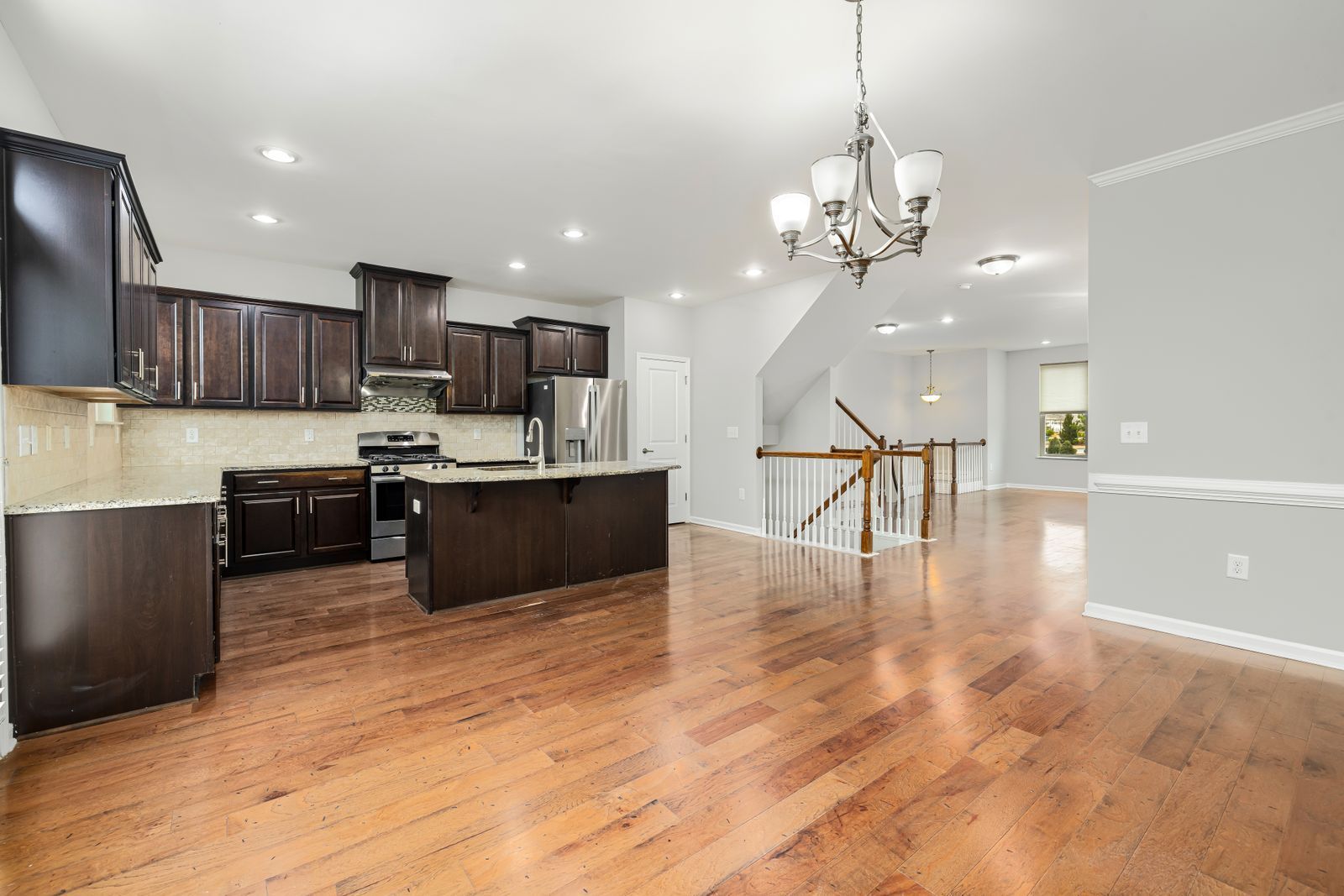
The subfloor decides the outcome in a mudroom more than in almost any other room. Concrete slabs at entries can wick moisture from below. Older homes may have uneven, patched, or settling subfloors that a thin sheet good will telegraph clearly.
In plain language, moisture testing means a professional checks what's coming up through the slab or subfloor before anything goes on top of it. Installing over a wet slab traps that moisture, and trapped moisture causes failures downstream, from adhesive breakdown to subfloor damage. The EPA's guidance on mold and moisture in homes covers the health side of why persistent moisture under flooring is more than a cosmetic problem.
Subfloor correction is the other half of prep. High spots, low spots, and fastener issues all need addressing. Rigid-core products tolerate more deviation than sheet goods, but neither forgives a bad substrate forever. If your mudroom subfloor has known problems, subfloor repair is worth understanding before you shop products.
On underlayment: vapor barriers over slab, acoustic underlayments under LVP, and manufacturer-specific requirements vary by product. The mudroom is not the room to skip the moisture layer. One caution from experience: DIY prep mistakes, like pouring self-leveler over an unknown slab condition or skipping a vapor retarder, are a common cause of early failure. This is where a professional measurement and subfloor check earn their keep.
Installation Expectations for a Mudroom
A mudroom is a small room that packs in details: doors, thresholds, a bench, hooks, sometimes a laundry connection, and a pet area, all in a tight footprint. "Small room" does not mean "simple day."
The typical sequence runs: measurement and product selection, prep and subfloor correction if needed, acclimation where the product requires it, installation, transitions and trim, and a cleanup and walkthrough with you. During the swap, you'll want an alternative entry available for the day, and the boot bench and storage moved ahead of time.
We don't promise next-day availability, because complex prep, stairs, or special-order product can extend timelines. What we can tell you is that we're licensed and insured (Flooring Contractor License S220). Scheduling specifics get sorted during the estimate conversation.
Common Mistakes to Avoid
- Choosing a product by looks alone and putting a moisture-sensitive floor in the wettest room of the house
- Skipping subfloor evaluation because the room is small; small rooms hide big flatness problems at doorways and transitions
- Letting sheet-vinyl seams fall in the wet zone instead of planning seam placement during layout
- Ignoring the transition plan to the kitchen, hallway, or garage door, creating trip edges or exposed gaps
- Omitting an entry mat system and expecting any flooring to absorb the grit burden alone
- Assuming a "waterproof" label covers standing water pooling at the door threshold; performance depends on product and install conditions
- Installing rigid-core plank over an uncorrected high spot and hearing it click and flex within a season
When Another Room Guide Fits Better
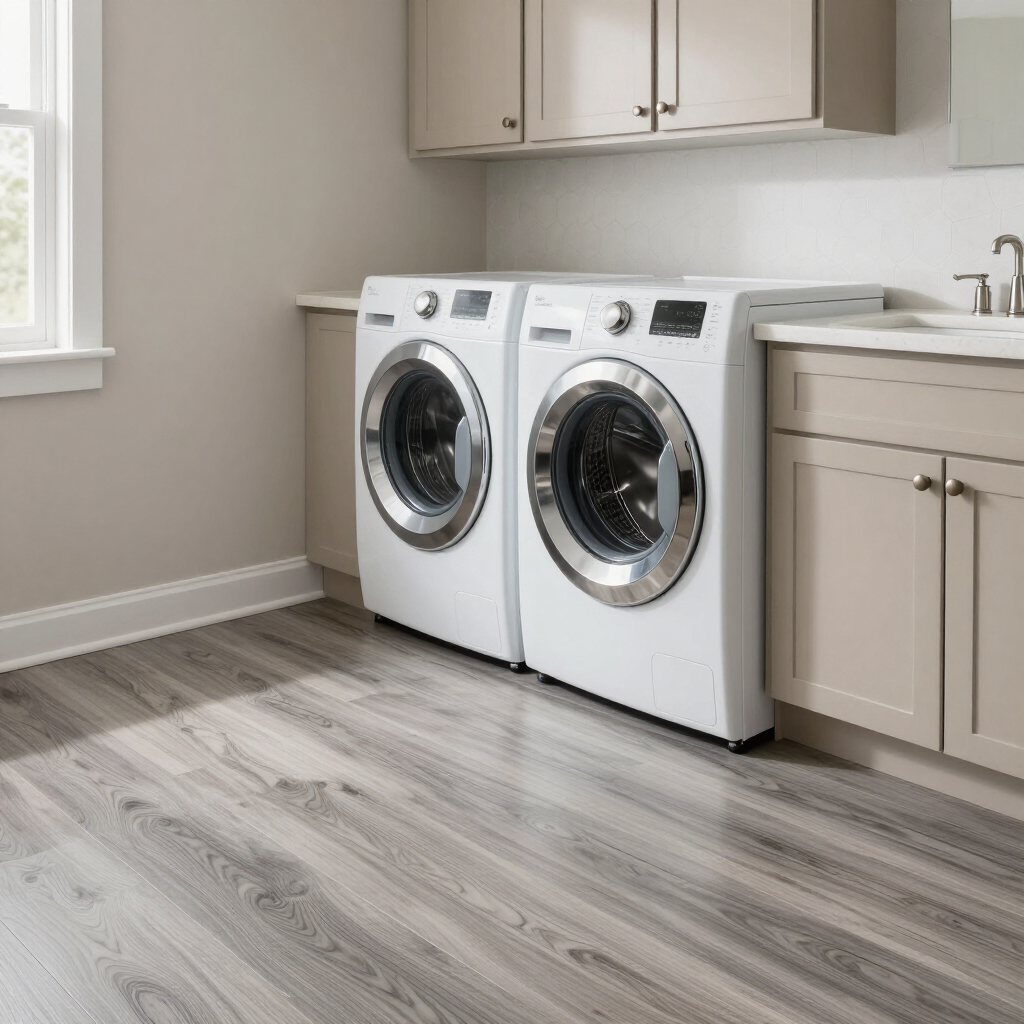
If your space is really a laundry room with hookups and splash risk, see our guide to laundry room flooring. If the real question is the basement at the bottom of the mudroom stairs, start with best flooring for basements. Stairs off the entry have their own product rules; see best carpet for stairs when that is the project. And if the driver is pets throughout your home rather than the entry zone specifically, see best flooring for pets. Keep this article's focus where it belongs: the entry boot-zone room itself.
What to Have Ready for the In-Home Estimate
To get the most out of the measurement visit:
- Photos or a clear sense of the current floor's condition, including curling seams, soft spots, slab cracks, or past water events
- How the room is actually used: boot volume, pet traffic, kids, laundry connection, garage entry
- Style goals: do you want the mudroom to match the kitchen and hallway, or stand on its own
- A rough timeline, and whether stairs or adjacent rooms are part of the project
- Your questions about products, prep, and moisture; the measurement visit is when you get specific answers for your home, not generic averages
Pricing is provided after measurement, so the estimate is when real numbers replace internet guesswork.
Get a Free Mudroom Flooring Estimate
The best mudroom recommendation depends on things nobody can see from a webpage: your subfloor, your moisture picture, and how the room connects to the rest of your home. That's why the next step is simply having a flooring professional look at the actual room.
We're based in West Jordan and serve homeowners across the Wasatch Front. Call (801) 907-1908 or visit our contact page to schedule a free in-home estimate, and let's put a floor under those wet boots that's actually built for them.
General information only; product availability, specs, and suitability for your home should be confirmed during your in-home estimate.
Recent Posts